186. $350
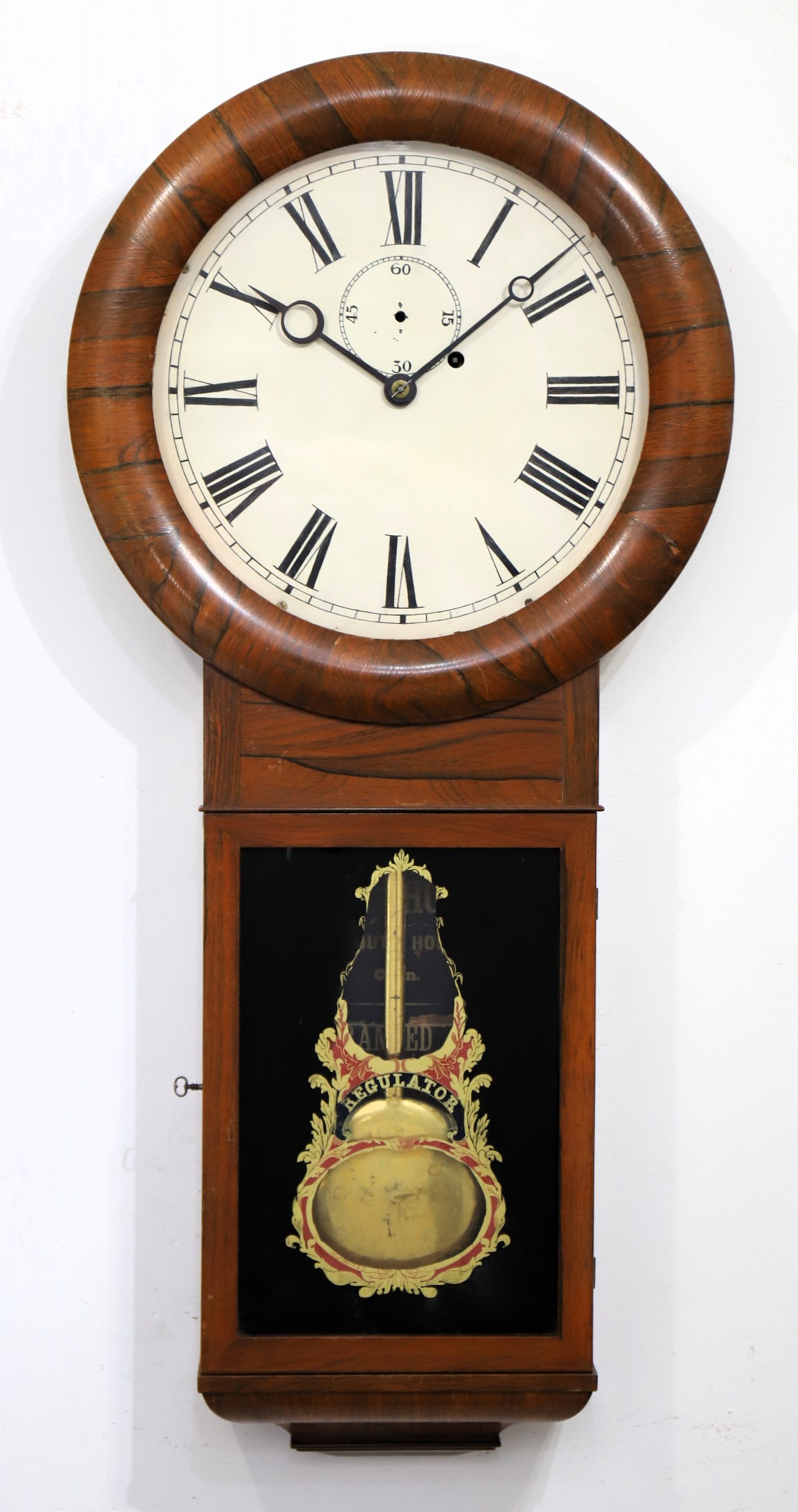
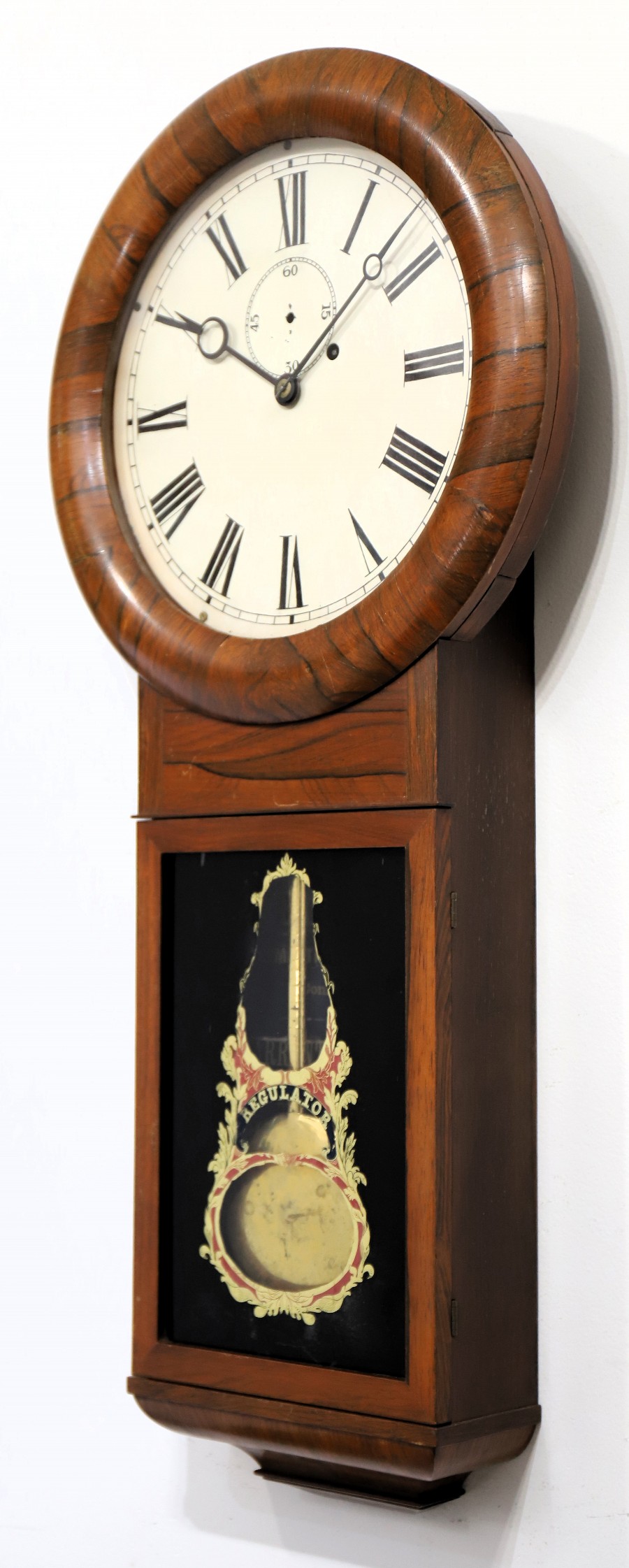
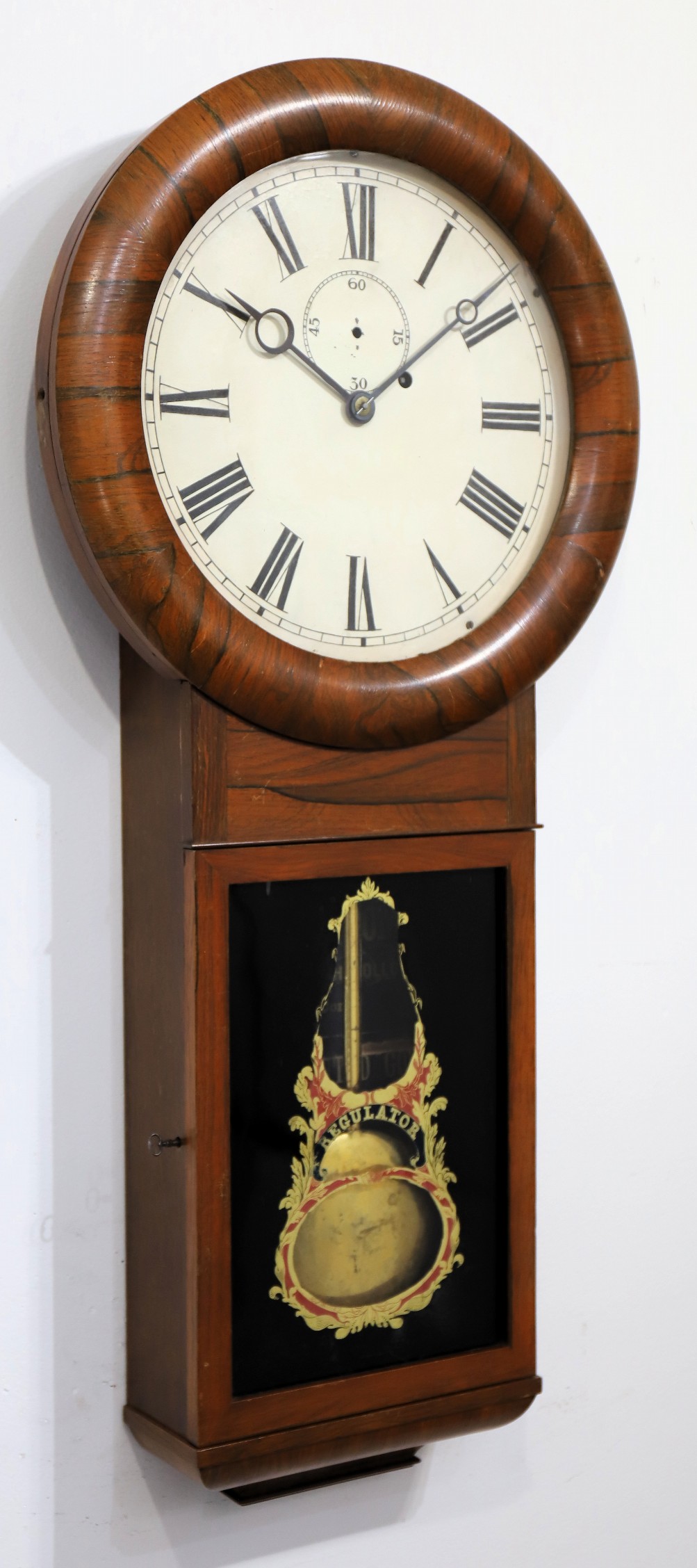
Seth Thomas “Regulator No. 2”, ca. 1863. The
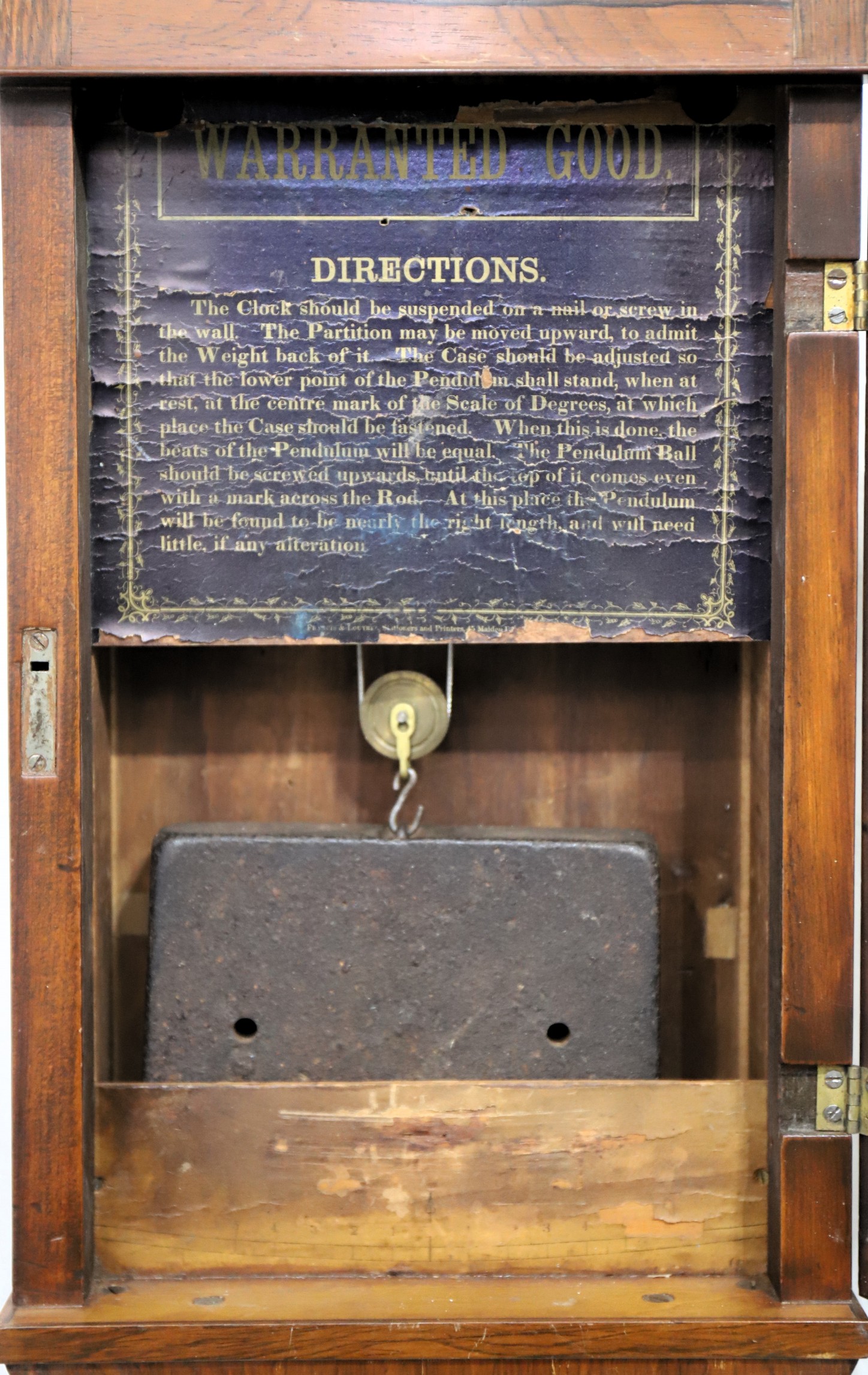
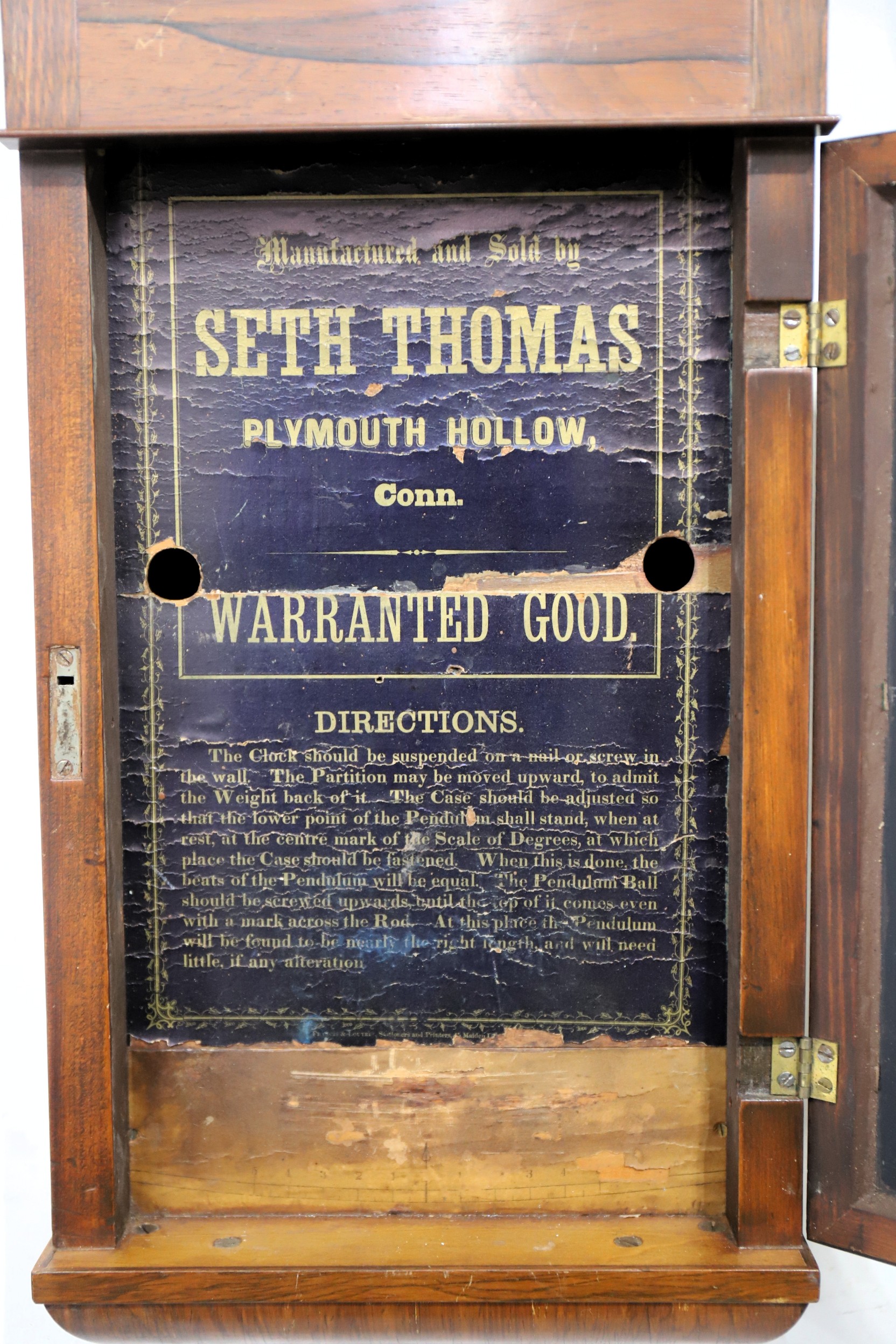
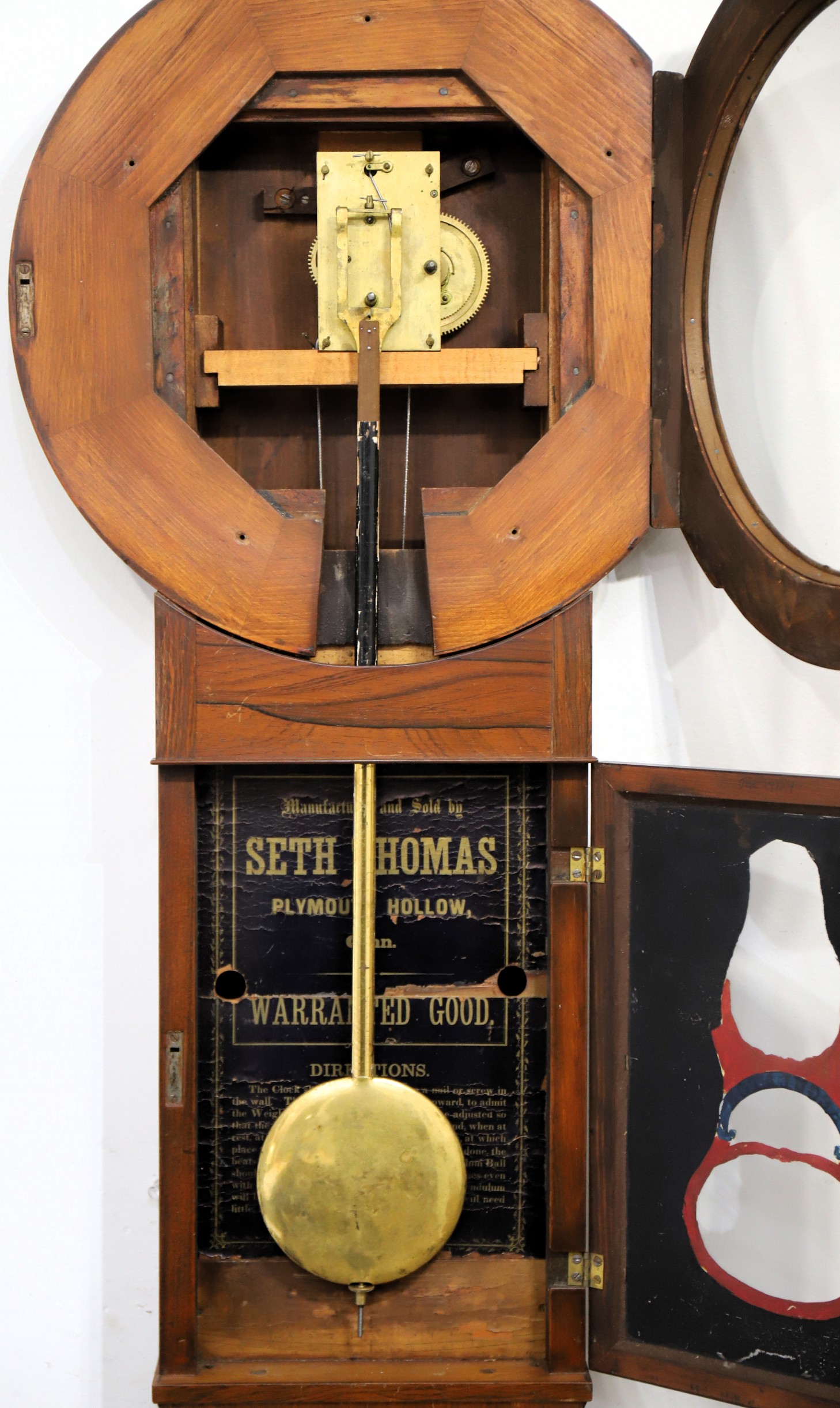
label on the weight shield shows Plymouth Hollow as the site of manufacture, dating this clock to before 1865 (by 1865 ST was using
“Thomaston” as the manufacturing location). Seth Thomas bought the bankrupt SB Terry business in 1859 and that included Terry’s
slant-base wall regulator (see #185) that served as the basis for Thomas’ Regulator No. 1 and No. 2. Like Terry’s clock, it
appears that the earliest ST regulators had a front-mounted pendulum with a cast iron weight falling behind a wooden weight shield
(as found here). Indeed, some No. 1 regulators used SB Terry’s round movement, presumably obtained in the bankruptcy proceedings
(see here and here). The earliest regulator of this style shown in Tran Duy Ly’s book, Seth Thomas Clocks & Movements, Vol.
1 is on page 274, a catalog illustration, and dated to 1863. However, Ly calls it a No. 2, and presumably the Seth Thomas catalog
did as well; nonetheless, it has the weight behind a weight shield with a Plymouth Hollow label, indicating that this is, indeed,
an early example. AAC sold an example of this style a year ago. This would suggest that Seth Thomas was calling these
early clocks by two names, No. 1 and No. 2, with the naming based not on where the weight fell, but on other less obvious factors. Steve Petrucelli suggests that there are two characteristics found on all No. 1’s: gilded trim around the lower door glass,
and key-locks for the doors. Reviewing the clocks in Ly’s book, all of those designated a No. 1 appear to have the gilded trim
and, where evident, key locks. Notably, the presence of a front-mounted pendulum (with the weight behind a shield) or
rear-mounted pendulum (with a brass weight in front) has no bearing on the name designation; Ly shows No. 1’s with brass weights in
front of the pendulum, and No. 2’s with the weight behind a shield. Indeed, Seth Thomas continued to make No. 1 regulators into
the 1880’s and even into the early 1900’s in a different case form, making them side by side with No. 2 regulators, and continued
to use both front-mounted and rear-mounted pendulums in both models throughout the late 1800’s.
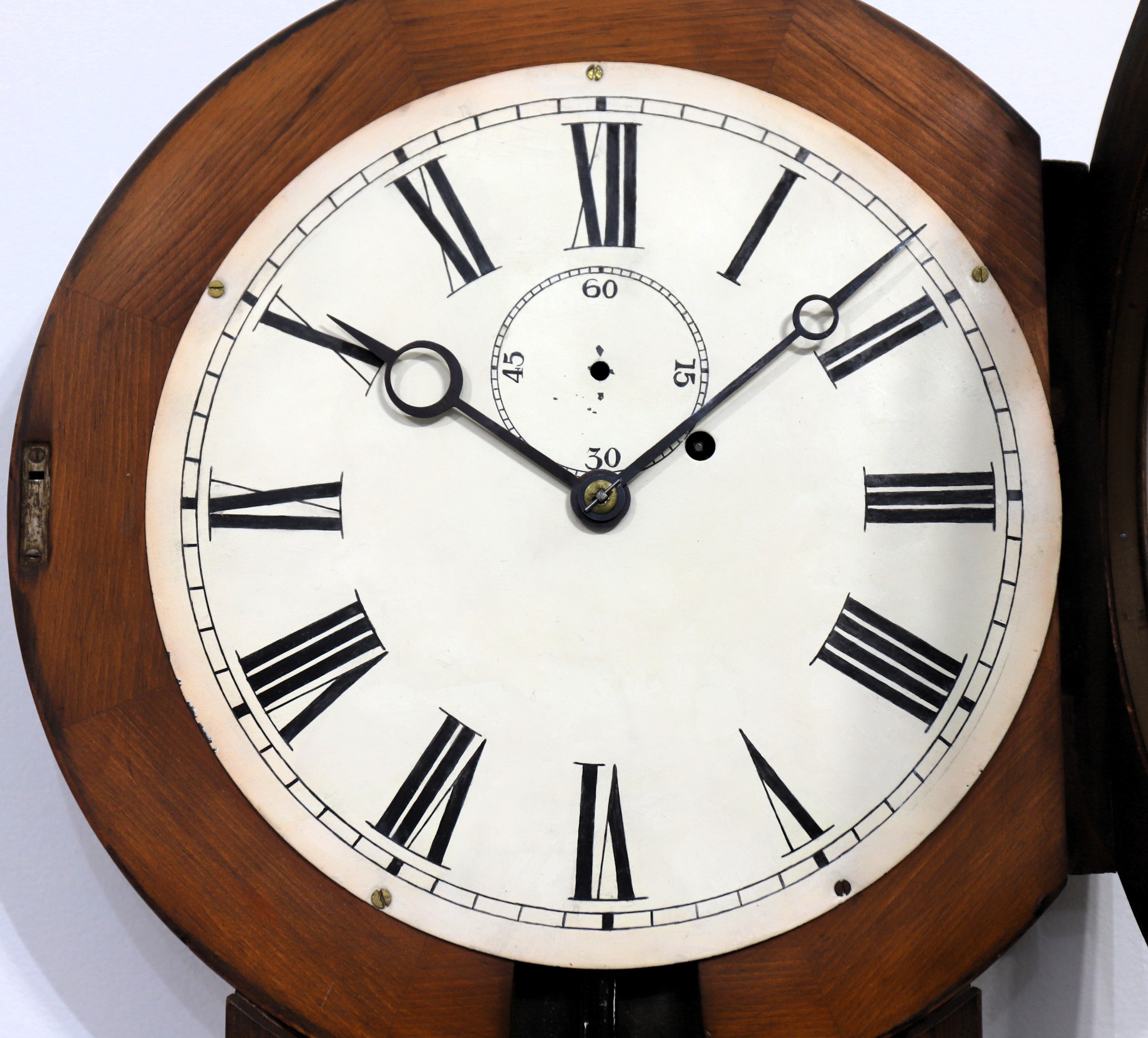
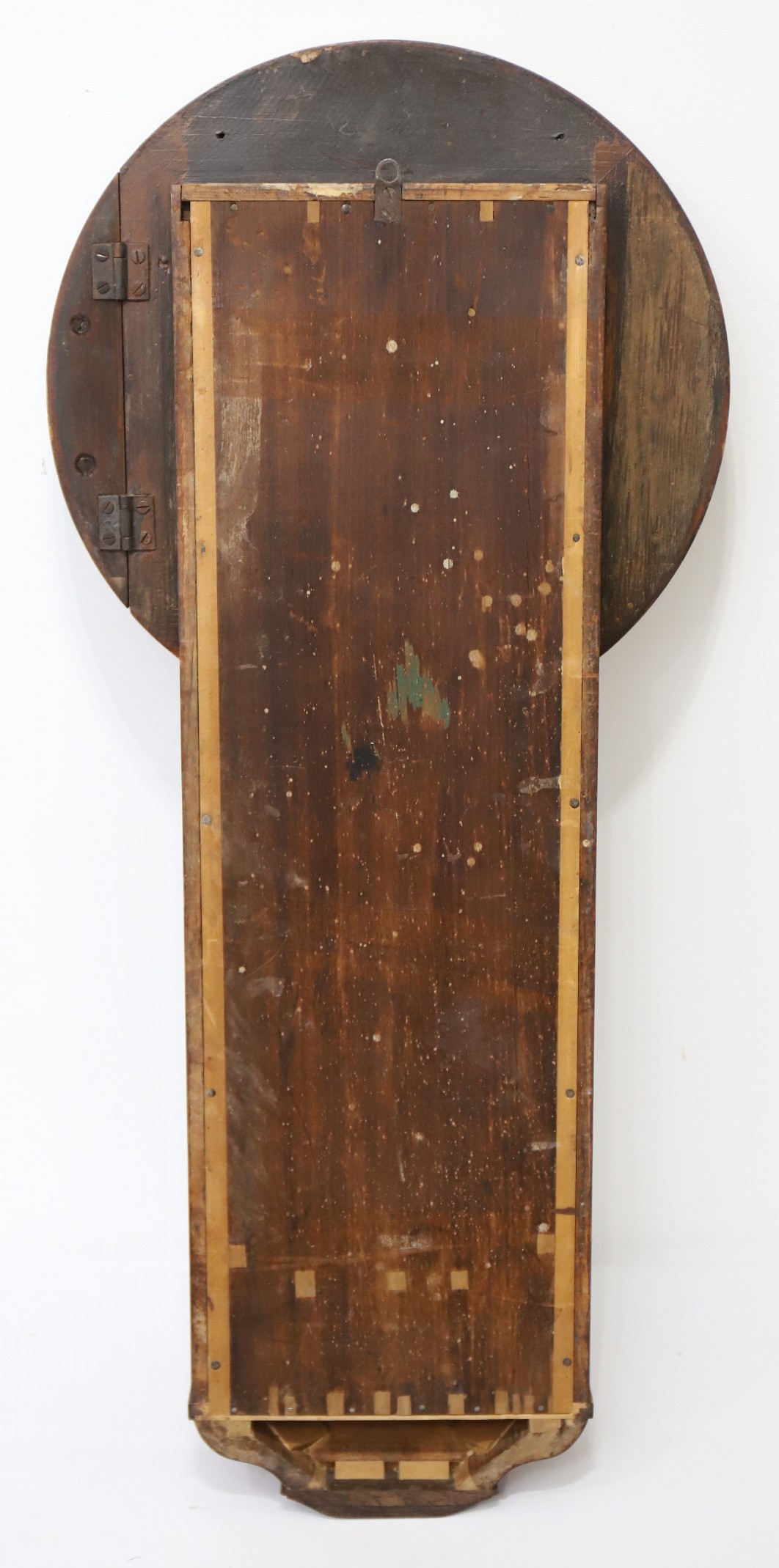
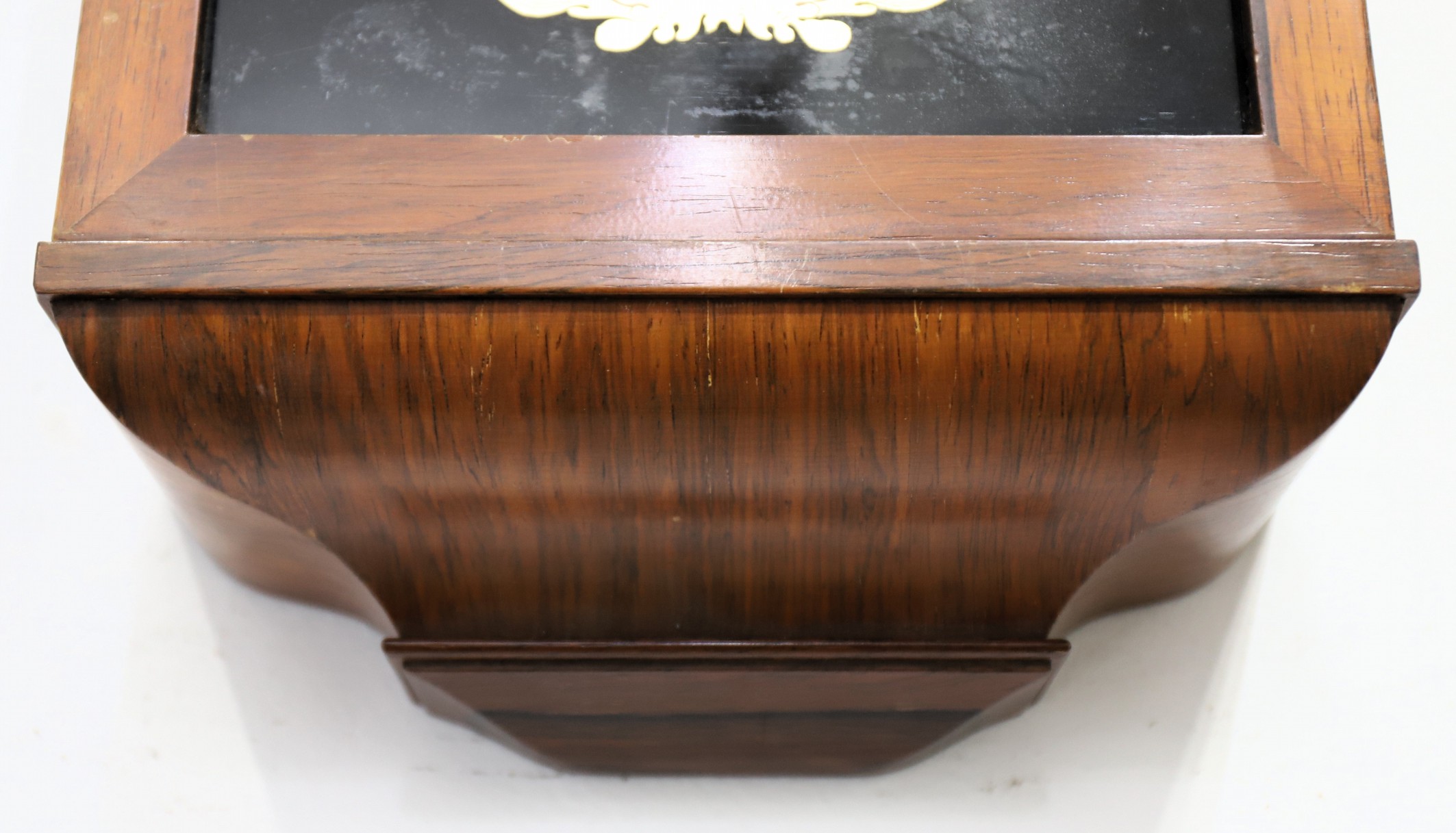
The 33-inch case is veneered
in rosewood in good condition and a clean, polished finish. There are key locks on the door and bezel but no gilded bead around
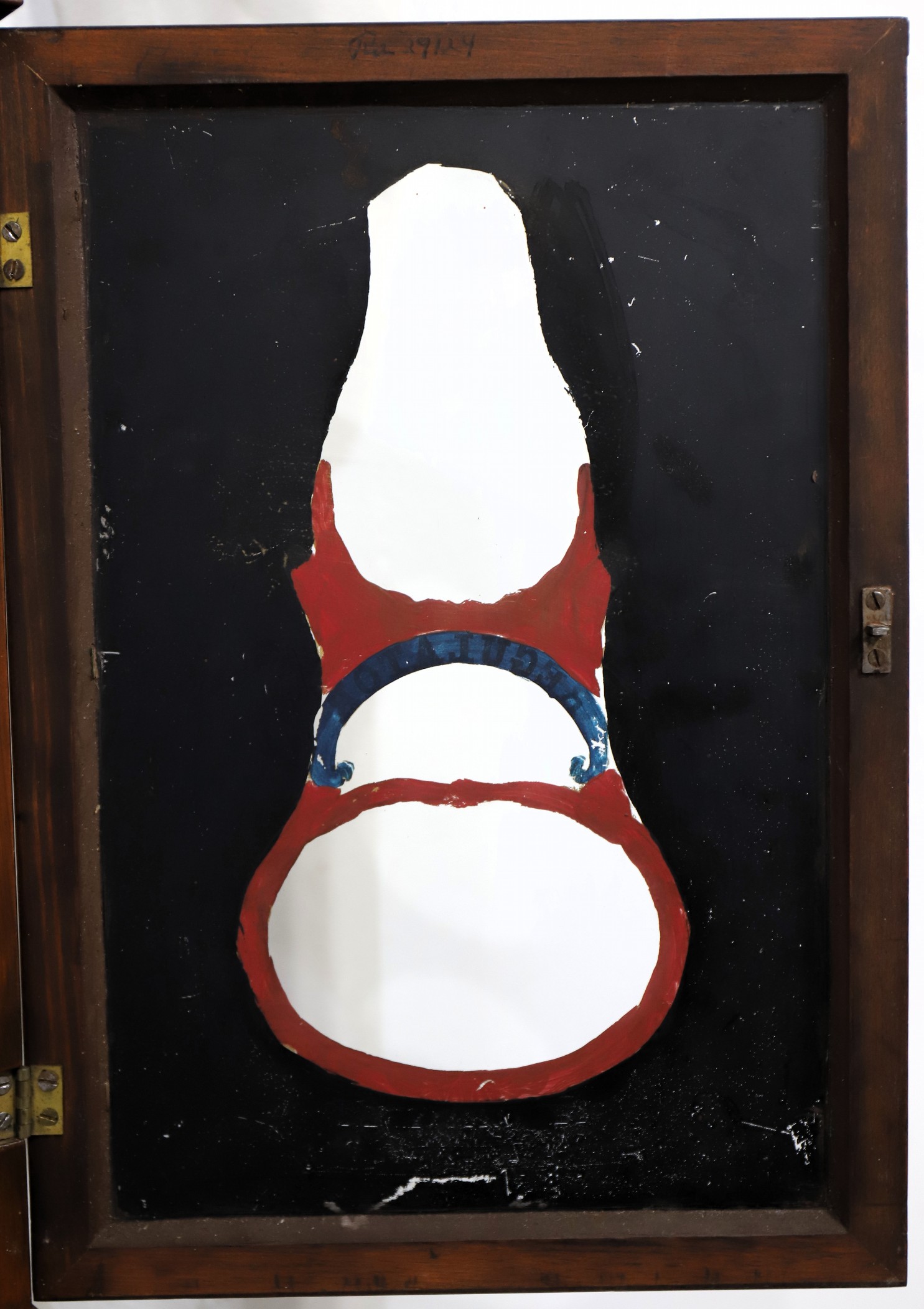
the lower door, immediately breaking the “key locks and gilded trim” rule for a No. 1 regulator – thus, I am calling this a No. 2. The dial glass is modern, the lower glass period with what appears to be the original gilded image, with some losses, and rebacked
some time ago. The metal dial was repainted some time ago as well and has yellowed a bit, but appears to be original to this
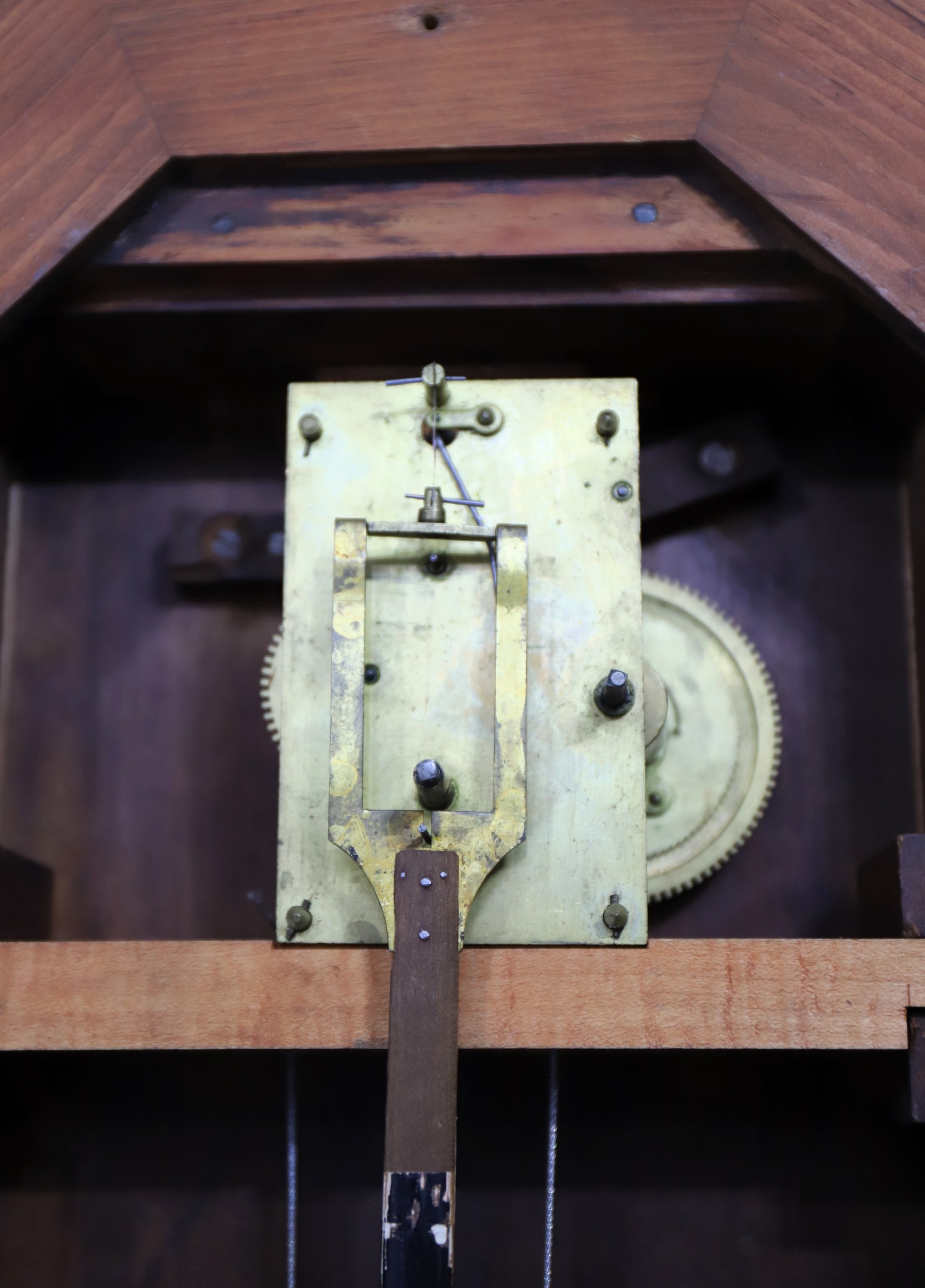
clock. The hands are appropriate and old, but the seconds bit is missing. The 8-day, time-only brass, weight-driven movement
(with the cast iron weight behind a shield) is unsigned with the likely original pendulum stick, gilded, and a large brass bob. It is running strongly, with a faded paper beat scale at the bottom and a well-preserved label on the weight shield. This is
one of the nicest early examples I have seen, and the Plymouth Hollow label is not common. $350–$600.

Antique American Clocks JULY 2026