191. $500
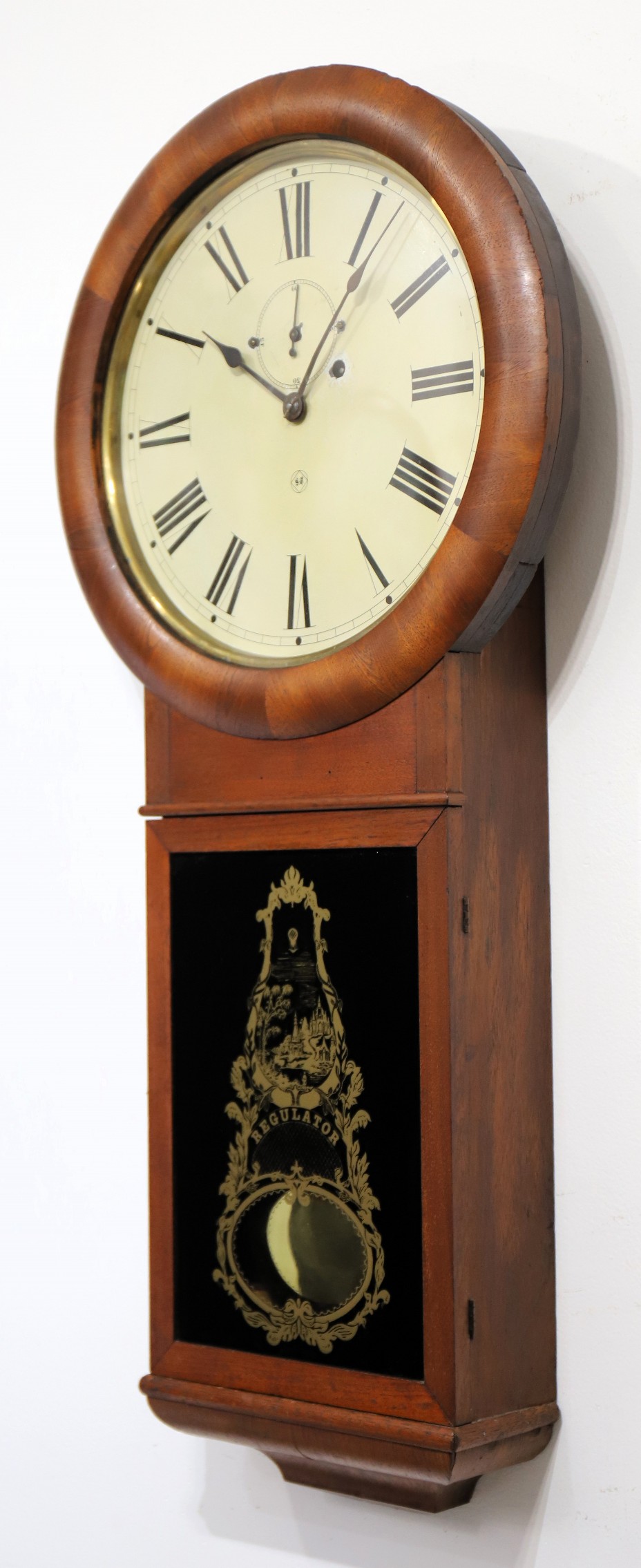
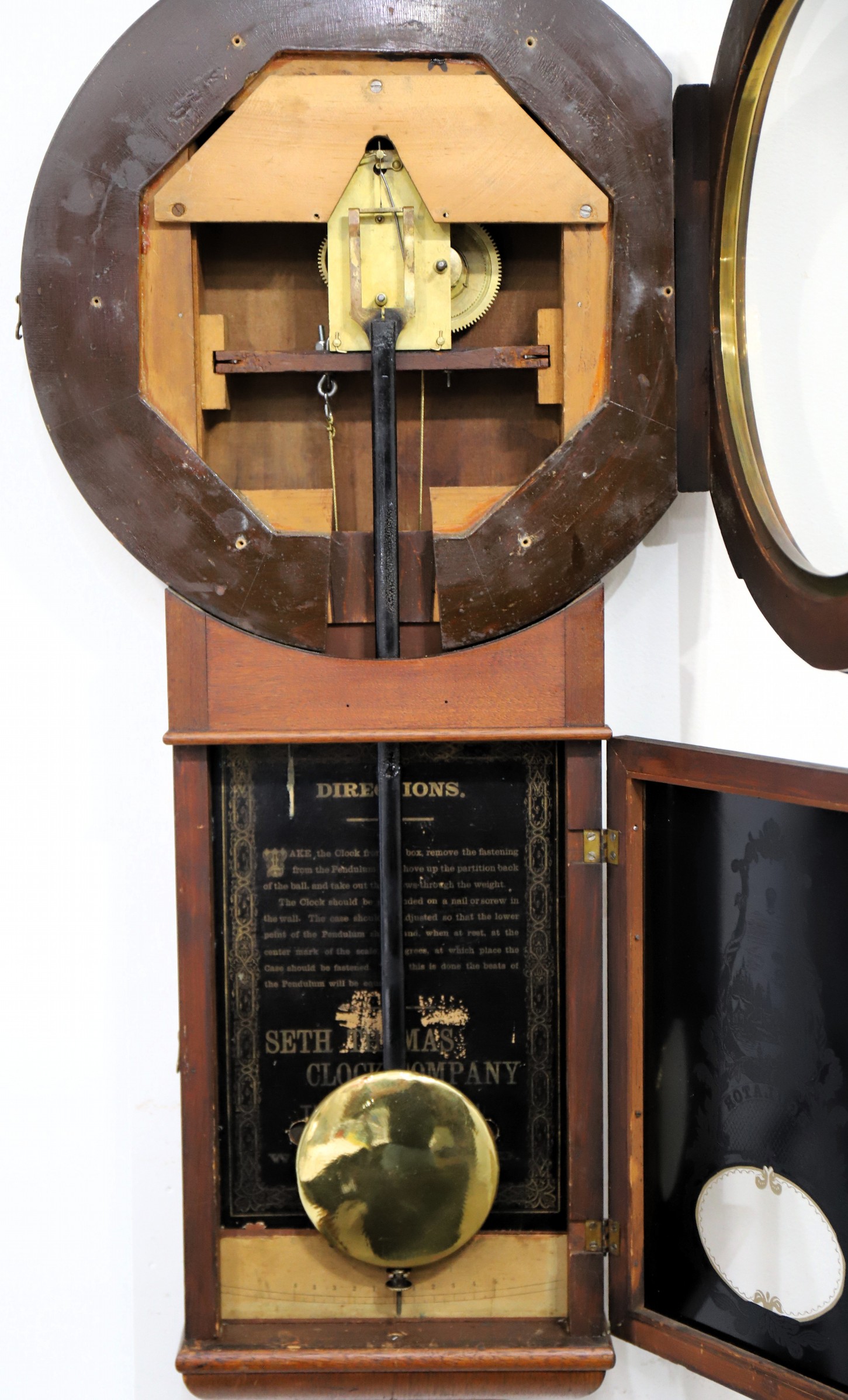
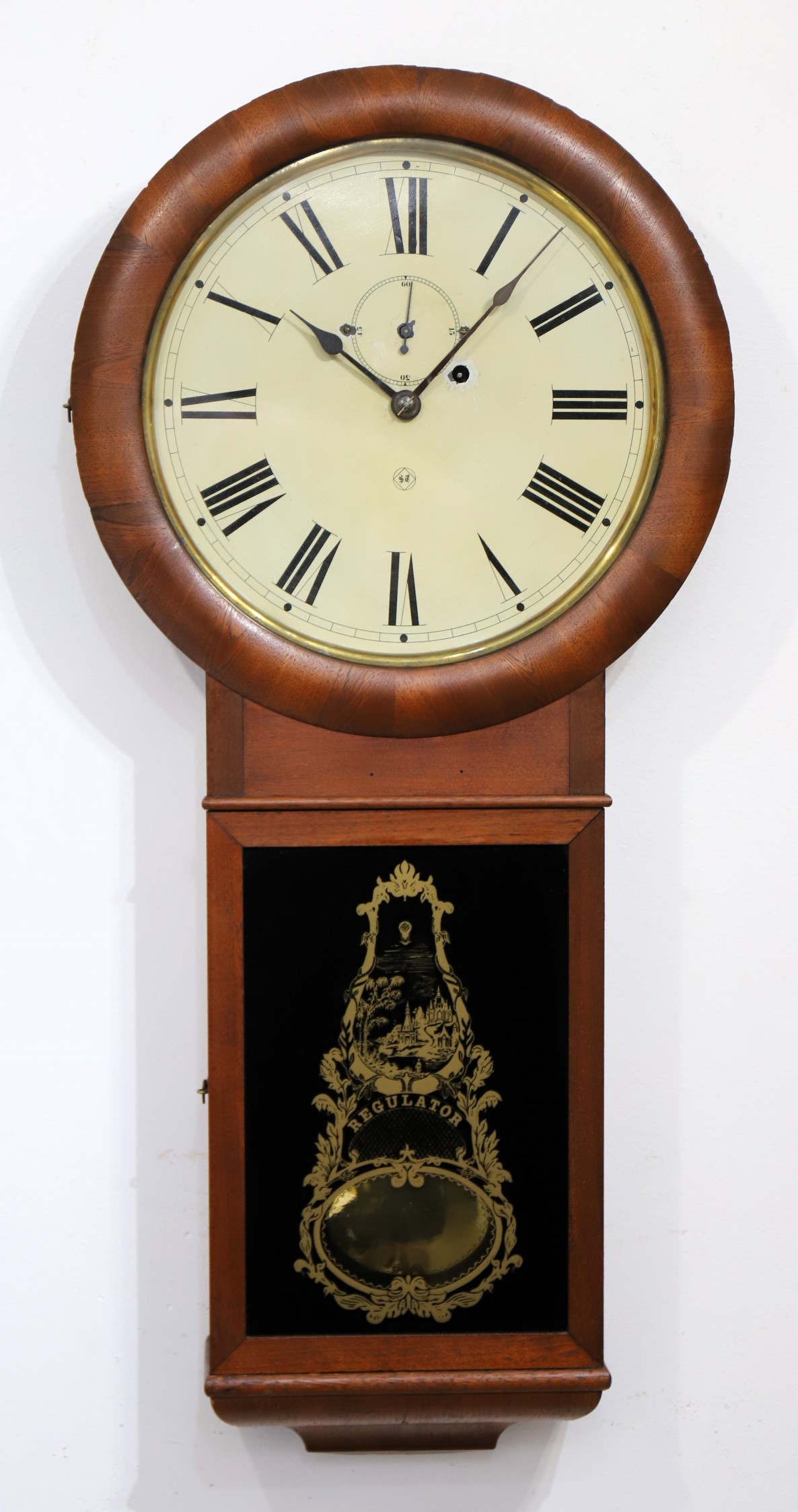
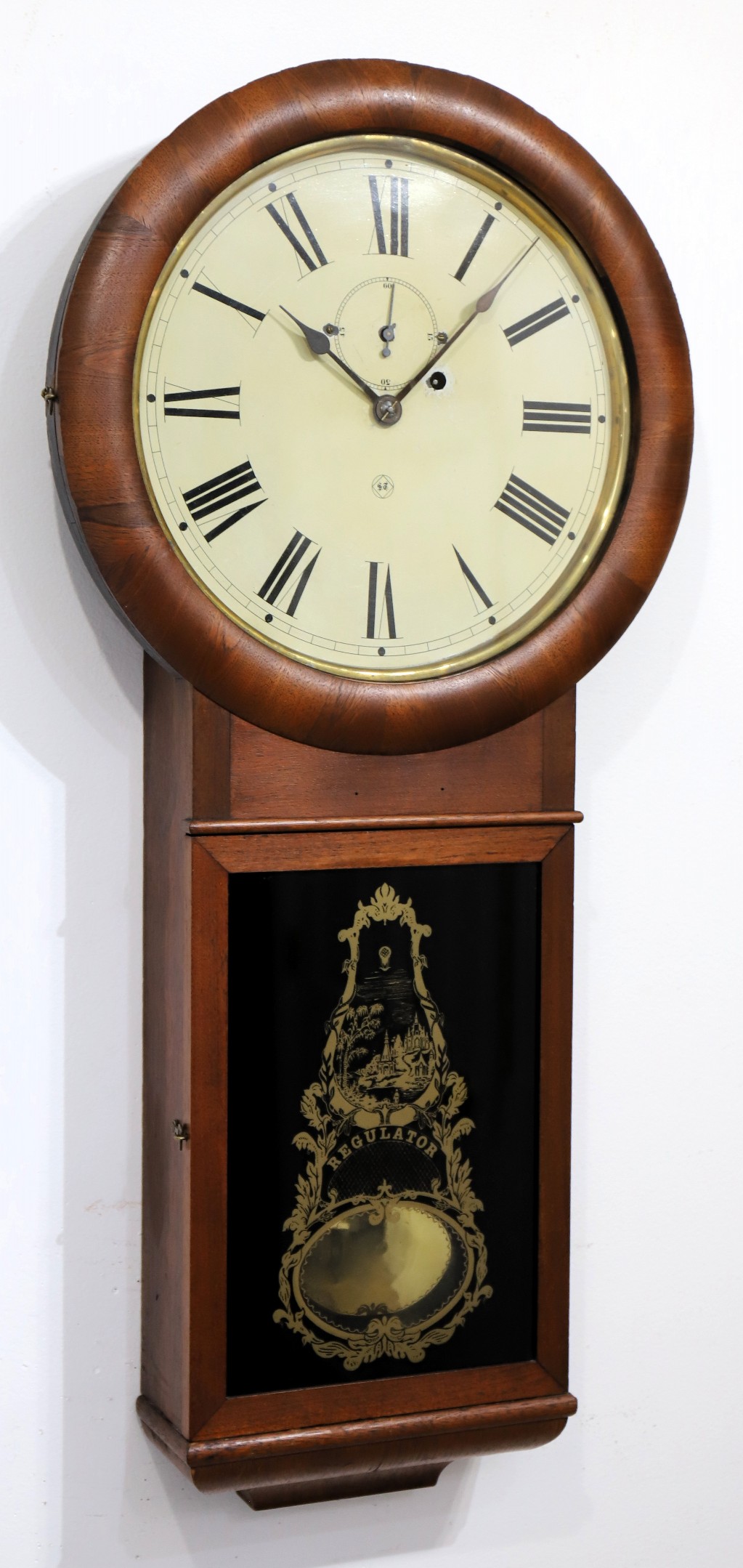
Seth Thomas “Regulator No. 2”, ca. 1874. This
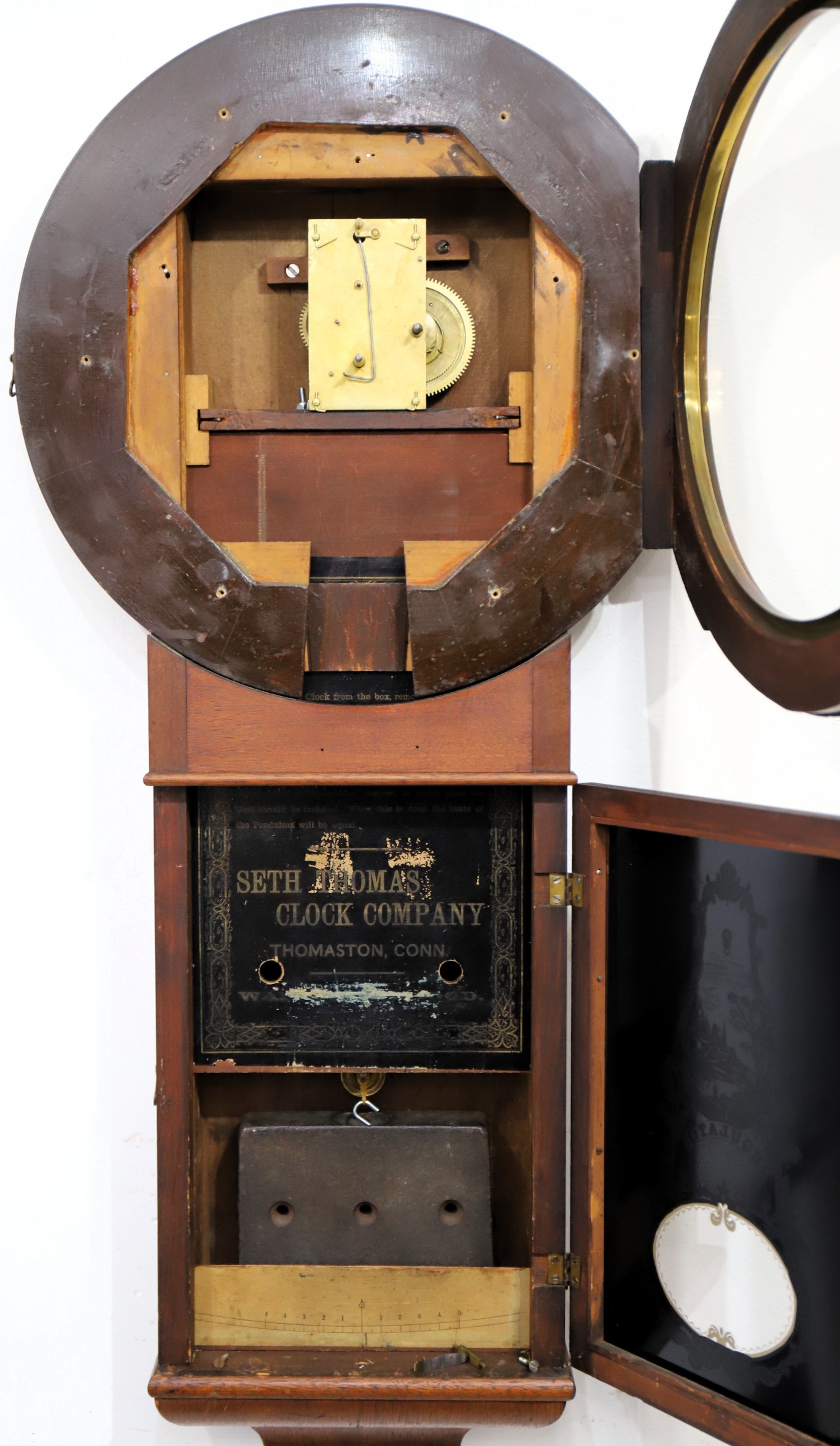
appears to be an early No. 2 regulator with a front-mounted pendulum, a seconds bit, and the weight behind a weight shield; in
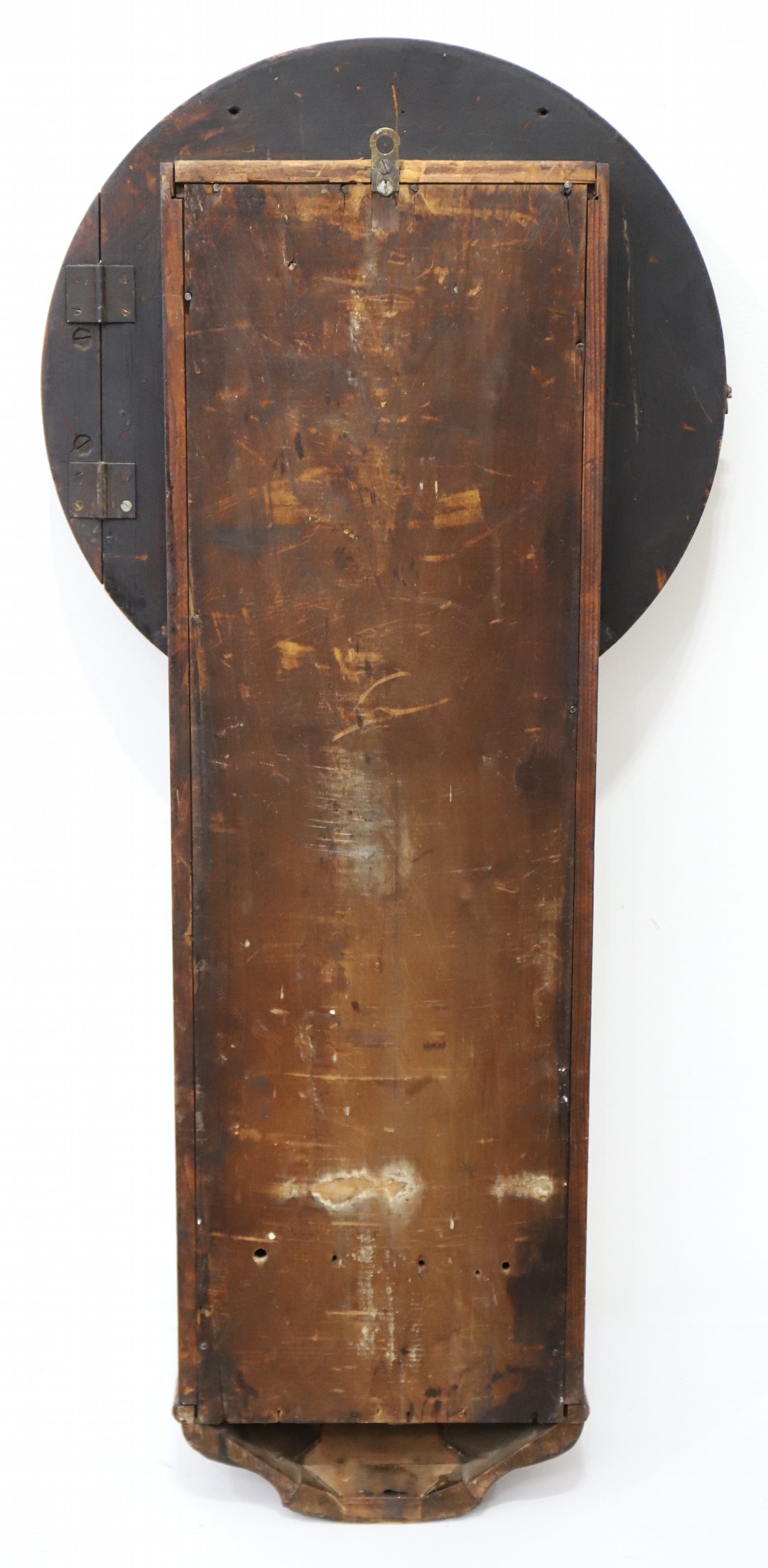
that sense it looks very much like a No. 1, and if you are confused don’t feel bad – read the comments below and you may feel better. The 33-inch case has been refinished and perhaps at least partially reveneered, as the walnut veneer is in perfect condition. The
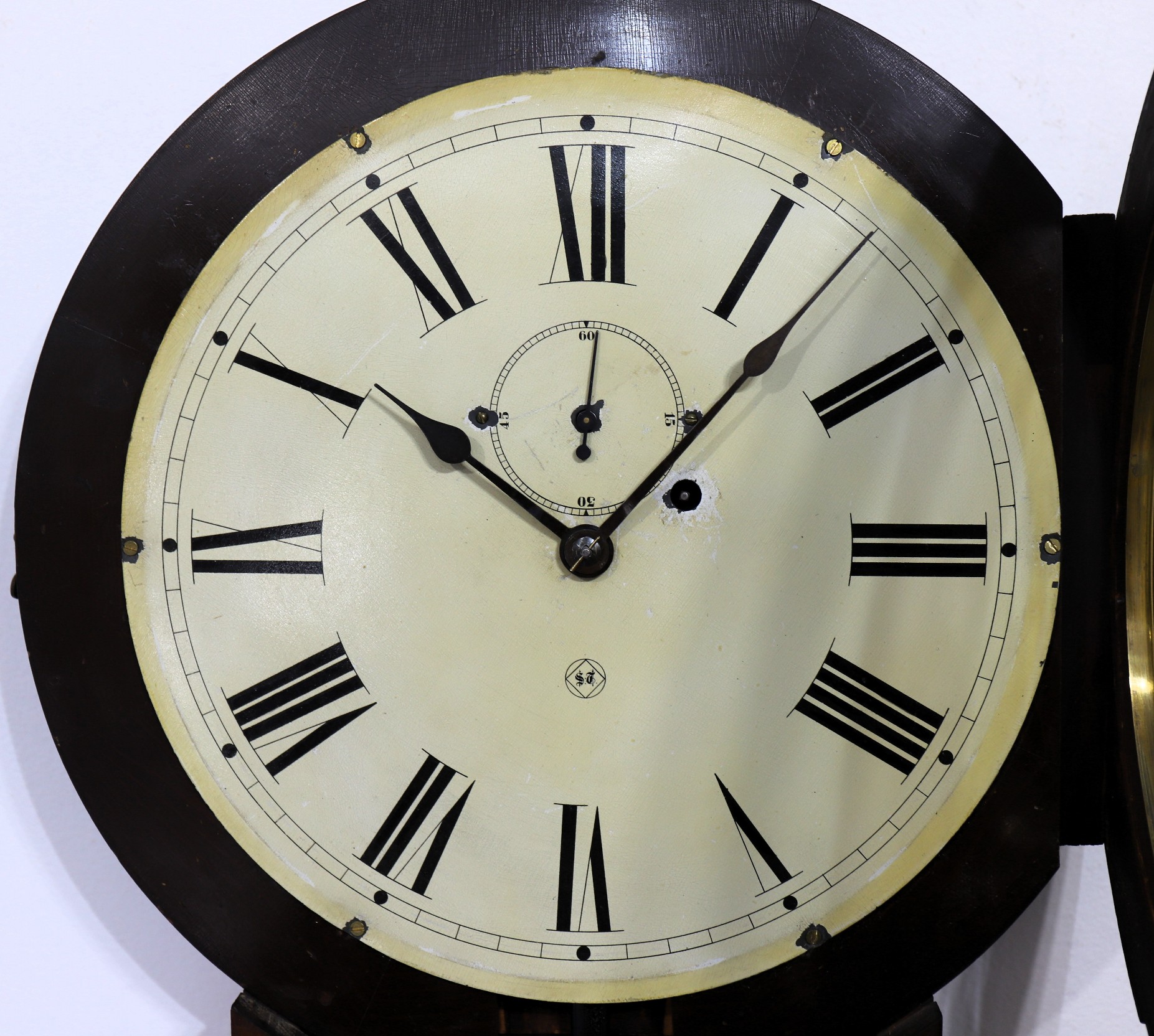
dial glass is period, the lower glass modern with a proper tablet. The painted dial is old, has the ST logo, with some yellowing;
I think it might have been repainted 50-100 years ago. The three hands are correct. The rectangular 8-day, time-only,
weight-driven movement is correct to this model and is running enthusiastically, driven and regulated by a correct weight and pendulum. There
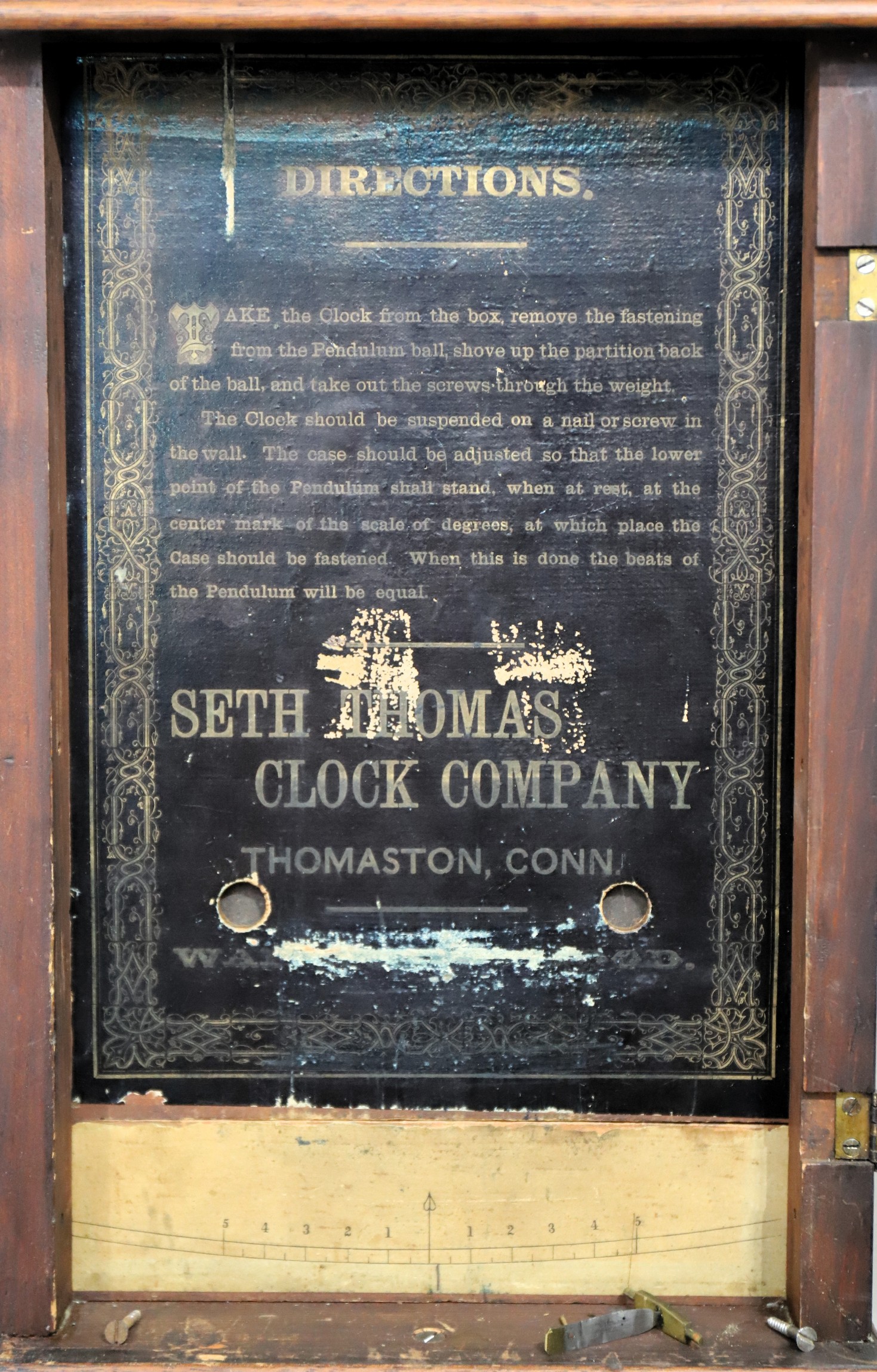
is a good label on the weight shield. It’s hard to find this model in good original condition as most have been restored
to some extent, as this one has. AAC sold a similar example in 2023 for $707. $500–$750.
So is this
a No. 1 or a No. 2? That is a surprisingly difficult question to answer. Seth Thomas did not make a big distinction in
their nomenclature; indeed, you can find the same catalog illustration called a No. 1 in one catalog, and in a later catalog it is
called a No. 2. Of course, ST used the same basic case for both models. I generally call any ST clock in this case with
the weight behind a weight shield (as found here) a No. 1, but there are No. 1’s with a single weight in front of the pendulum (like
most No. 2’s) and No. 2’s with a weight shield – take a look at Tran Duy Ly’s Vol. 1 on Seth Thomas clocks if you need confirmation
of the confusion. I asked my expert on all things clocks, Steve Petrucelli, what the criteria were for distinguishing these
two models. His answer was nuanced and complicated, as ST did not set out fixed criteria for these models. Here are the
criteria he gave me (as I understood them): Round movement = No. 1; case door lock with key = No. 1; case door lock with hook
= No. 2; beaded, gilded molding around lower glass = No. 1; rear-mounted pendulum = No. 2. A seconds bit seems to be present
on all No. 1’s and on some but not all early No. 2’s; later editions always had a seconds bit (thanks to Richard Whatley for that
information, which was in concurrence with Steve’s comments). So, as I said, it’s complicated.
Looking at this example,
it lacks two criteria needed to be called a No. 1: It has a hook latch on the door and lacks the beaded trim around the lower
glass. So I’m calling it an early No. 2, but I welcome your comments, corrections, and criticism!
Antique American Clocks January 2026