76. $1200
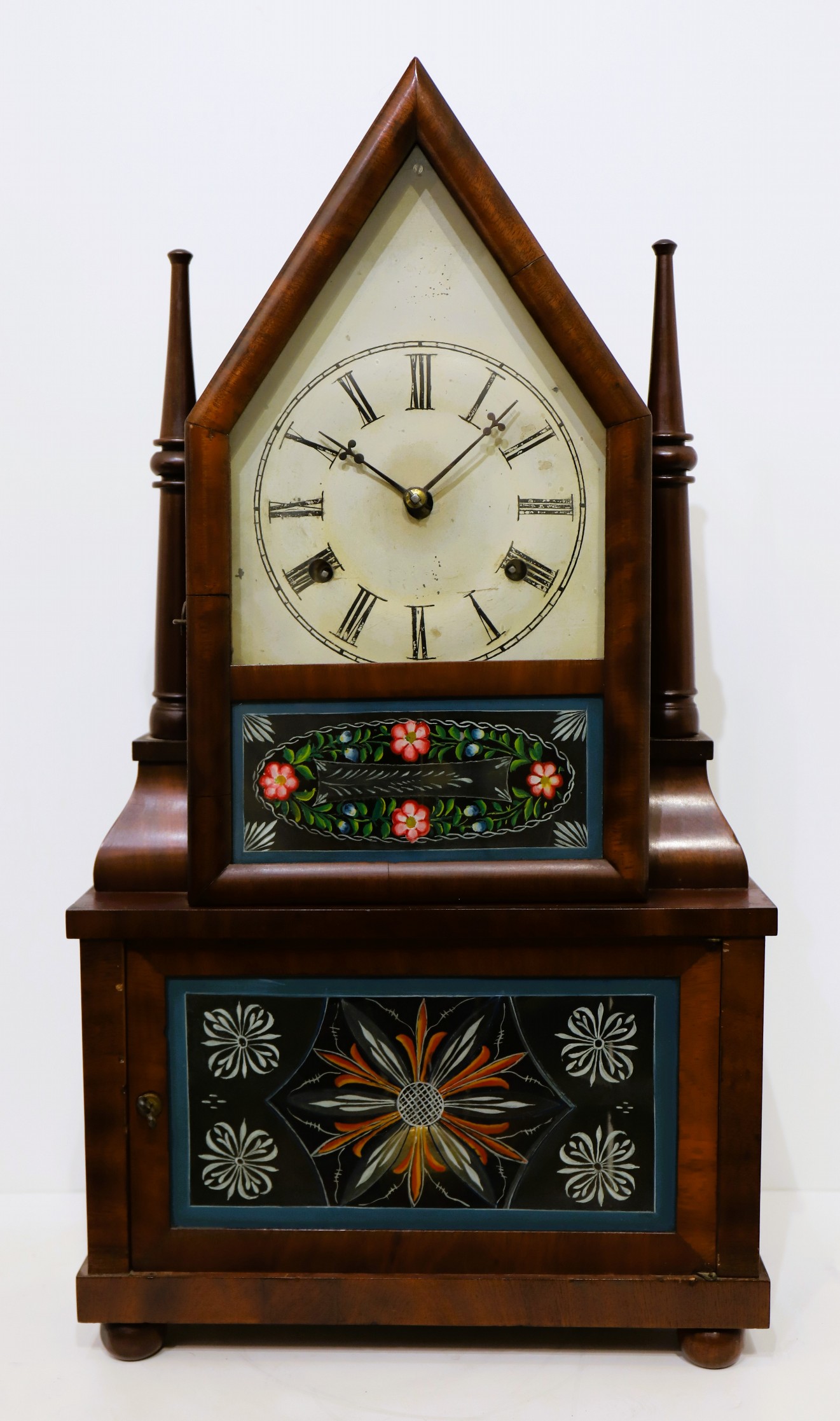
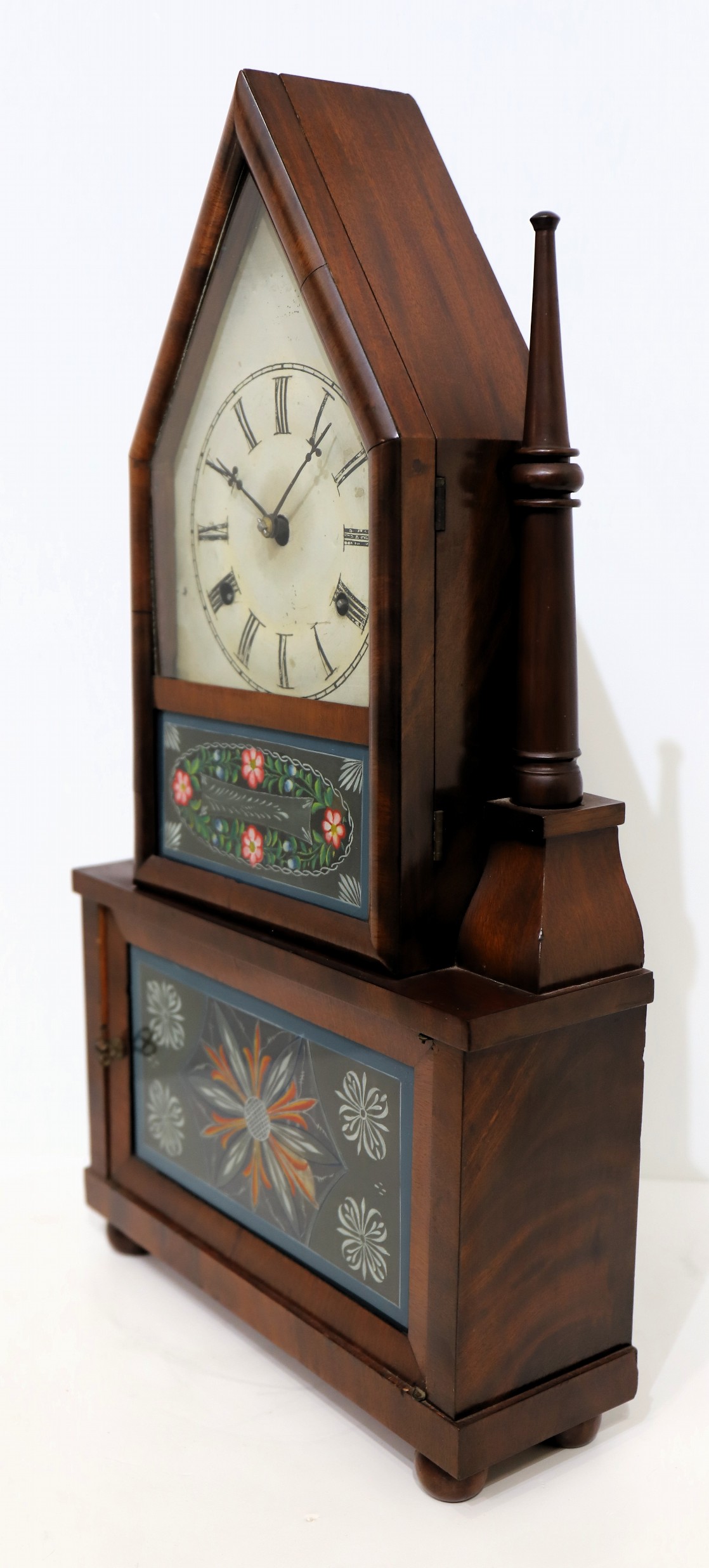
Birge & Fuller candlestick double-steeple
with a 30-hour wagon-spring movement, 1844–1848. A second double-steeple with single candlesticks on each side and a 30-hour
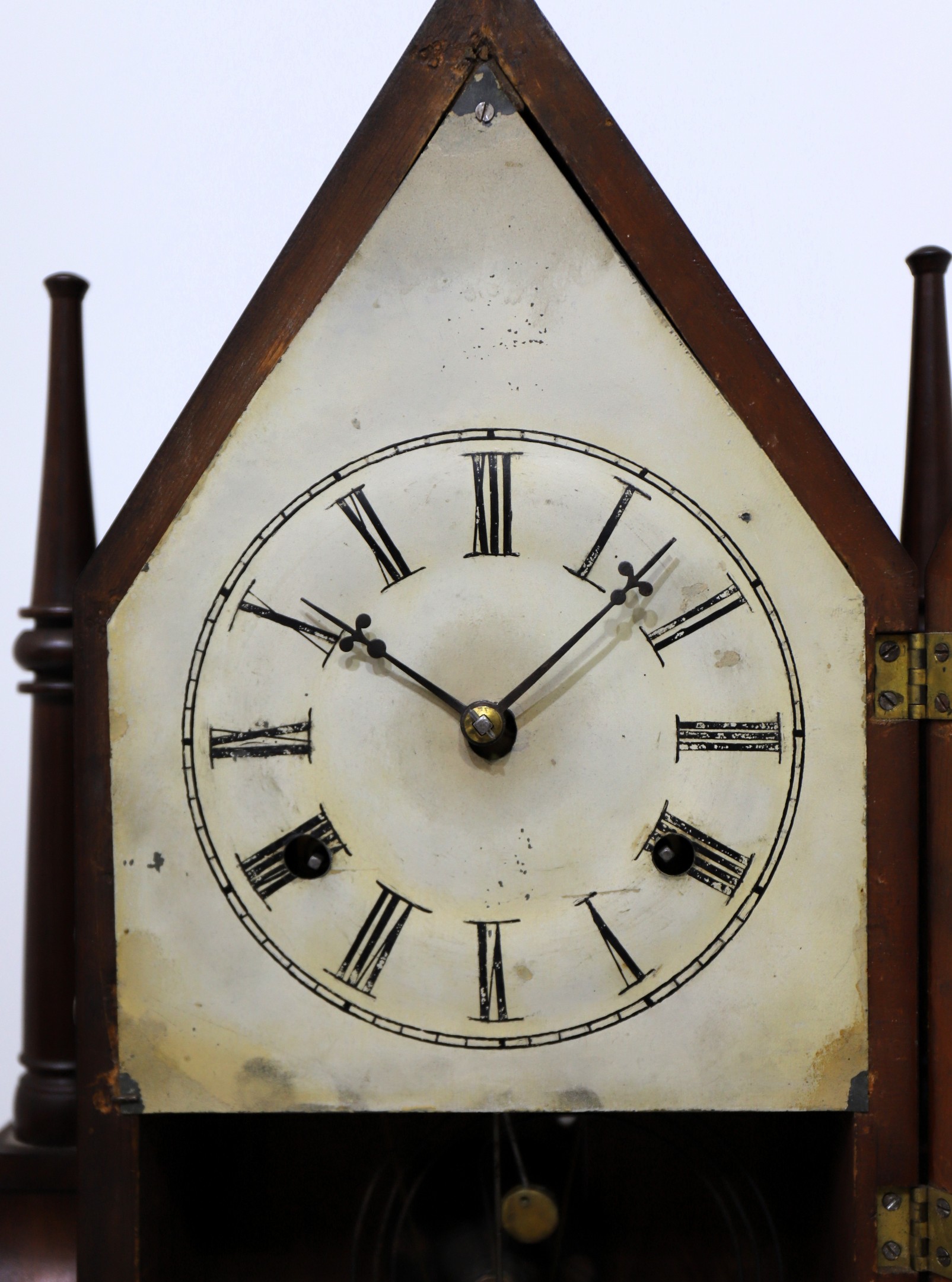
wagon-spring movement, here in a “sharp gothic” case. The case is 21.75 inches tall and 11.75 inches wide with mahogany
veneer and three old glasses; both Fenn tablets have been repainted. The candlesticks look original, the button feet may
be replacements. The contoured metal dial holds the original paint with some discoloration; the numbering has been strengthened,
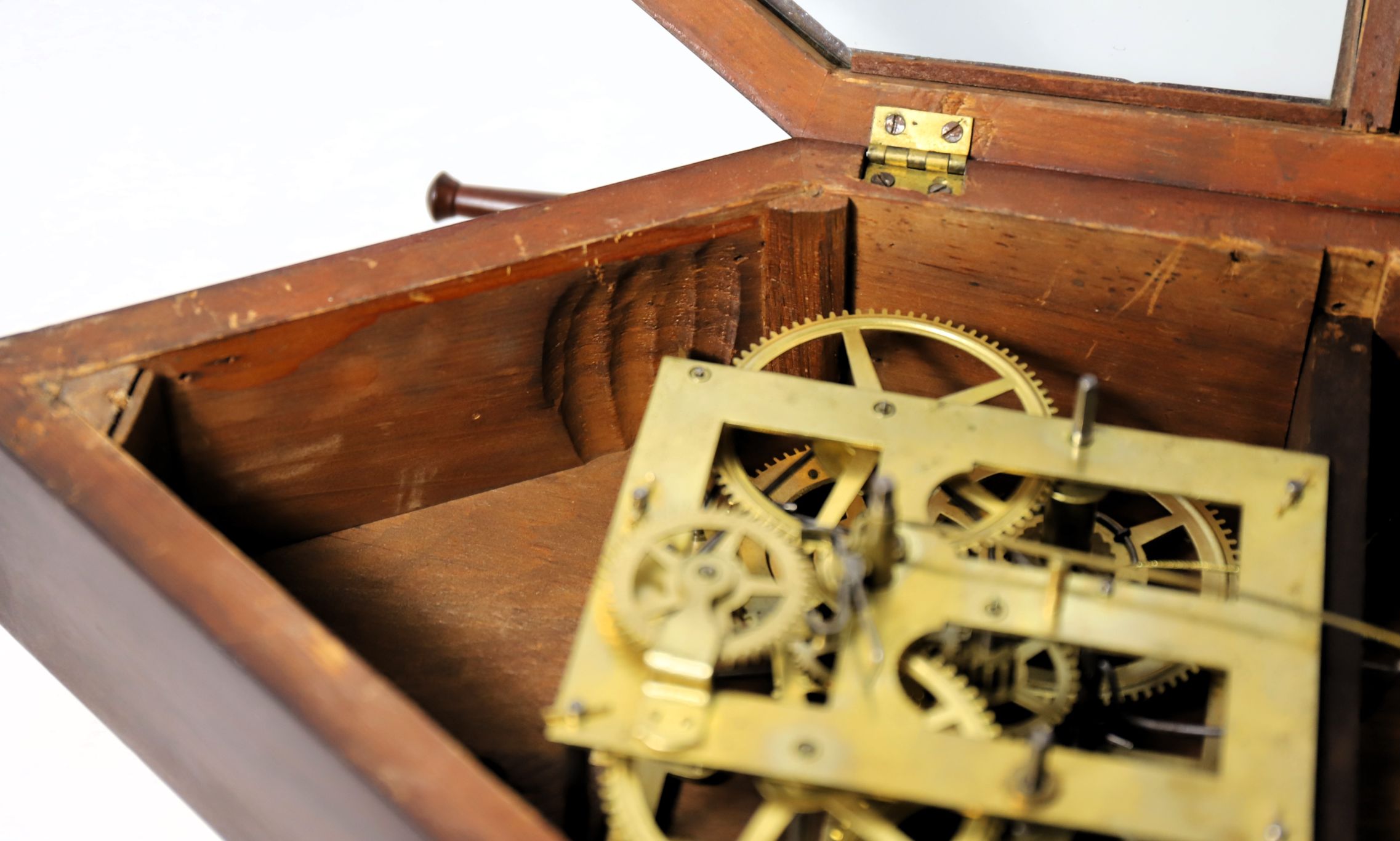
the hands are likely original. The 30-hour time-and-strike movement is unusual in that the time and strike trains are reversed,
such that the strike winds on the right side and the time winds on the left. This movement is most often found in the round
gothics described in #75 and may have been made by Joseph Ives (the movement is unsigned); sharp gothics like this usually contain
a conventional 30-hour time-and-strike movement that is signed by Chauncey Boardman. Nonetheless, it appears that this movement
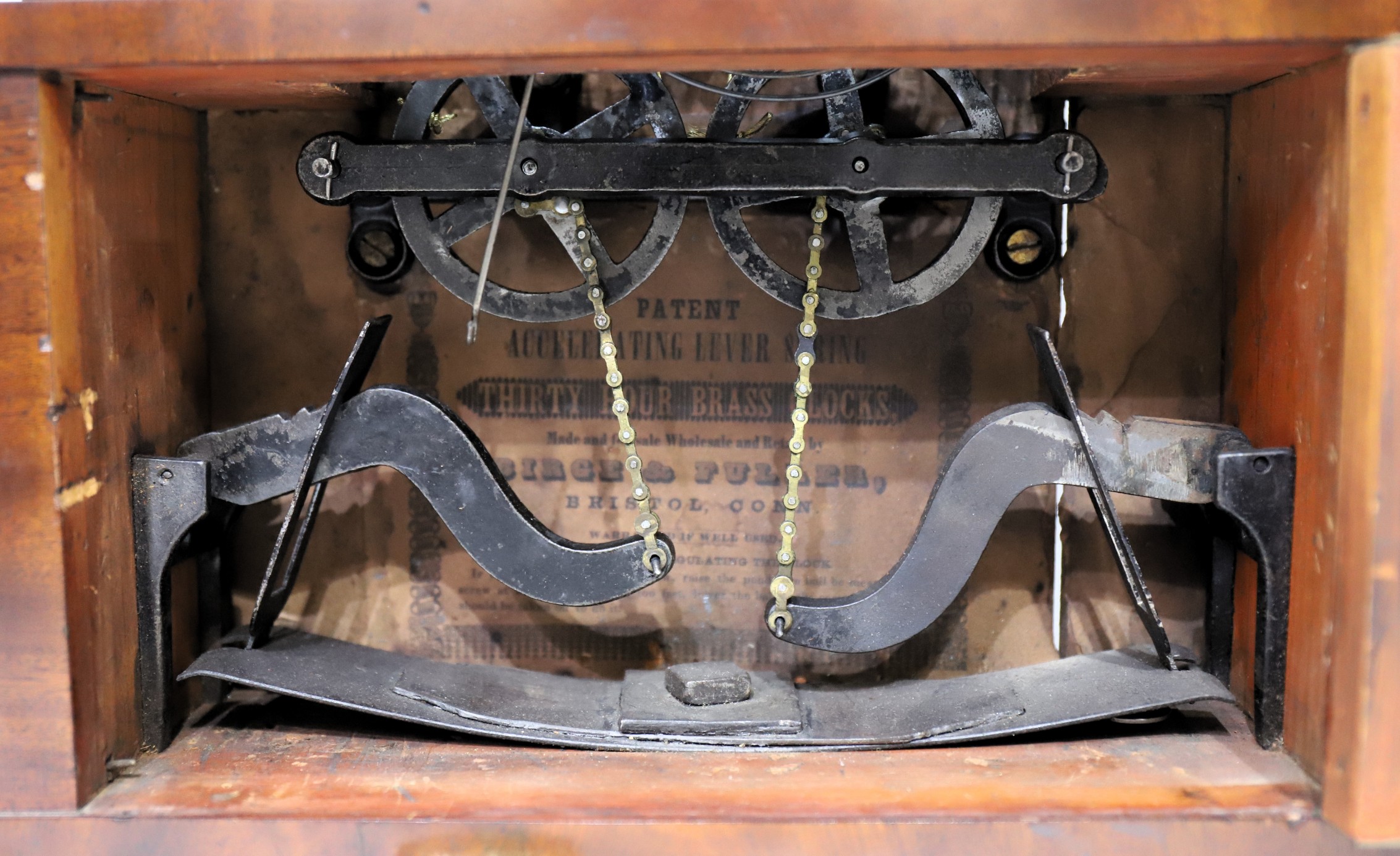
has always been in this case, as the inside of the case is carved out on the top right to accommodate the strike flywheel (see photo). The clock is running and striking on the wire gong without problem. There is a period pendulum bob and a dark label behind
the wagon-spring. This clock is pictured in Brooks Palmer, The Book of American Clocks on plate 236. AAC has sold
two similar examples for $1500 and $1800; this is the only example I can find with a reversed-train movement. $1200–$1800.
If
you are wondering if the movements in #75 and #76 could be swapped, they cannot be – the movements are specific to the seat boards,
and the seat boards are different lengths to accommodate the different widths of these clocks. Thanks to Gerald Siegel for pointing
out to me the unexpected movement in #75.



Antique American Clocks January 2026