266. $25 ea
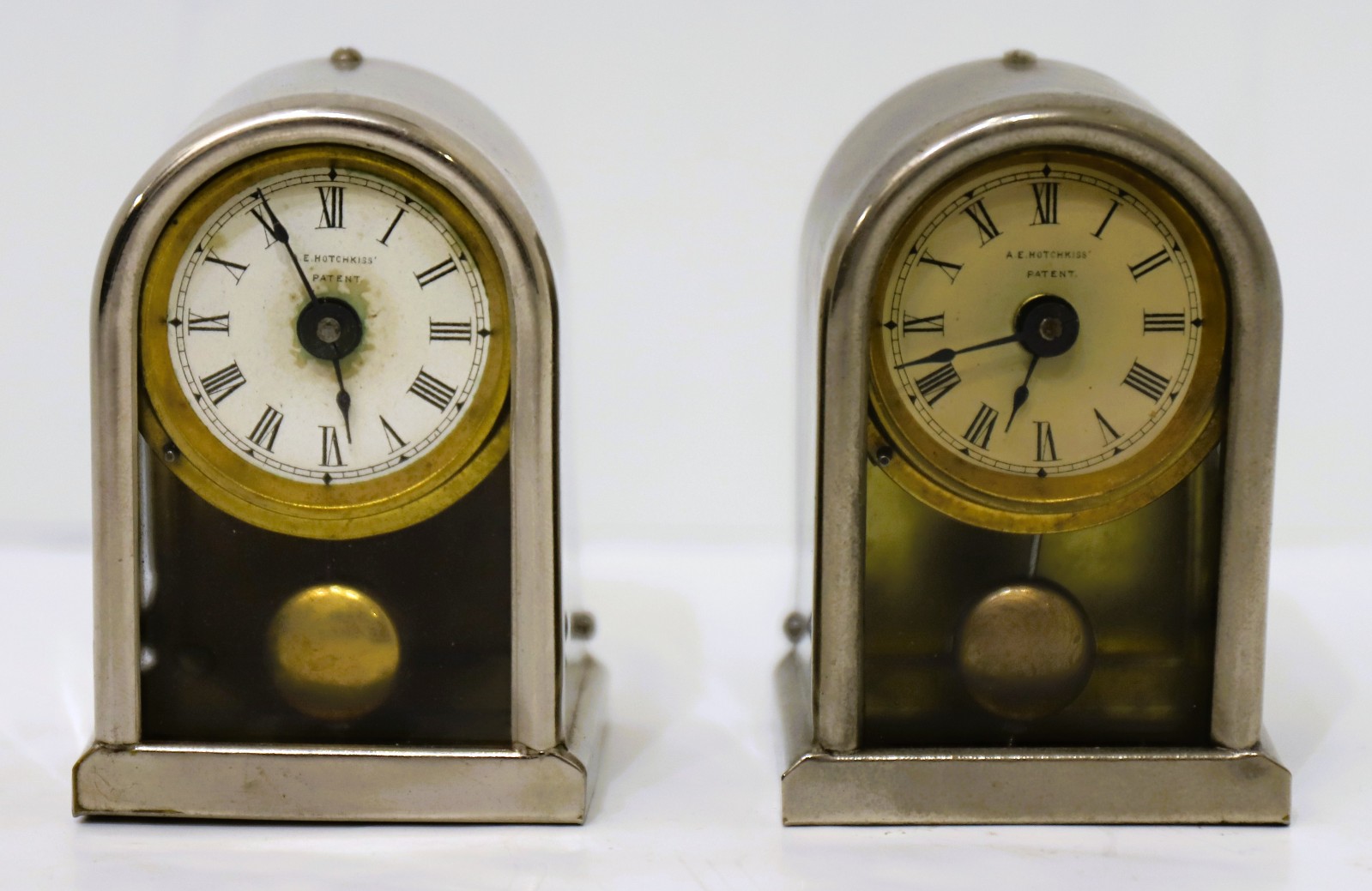
The Parker & Whipple Co. small pendulum clock,
1880-1893. John E. Parker & H.J.P. Whipple worked out of Meriden, CT making locks; in 1880 they obtained the rights to manufacture
small time-pieces and alarm clocks patented by Arthur E. Hotchkiss (note his name on the paper dials of these clocks). These
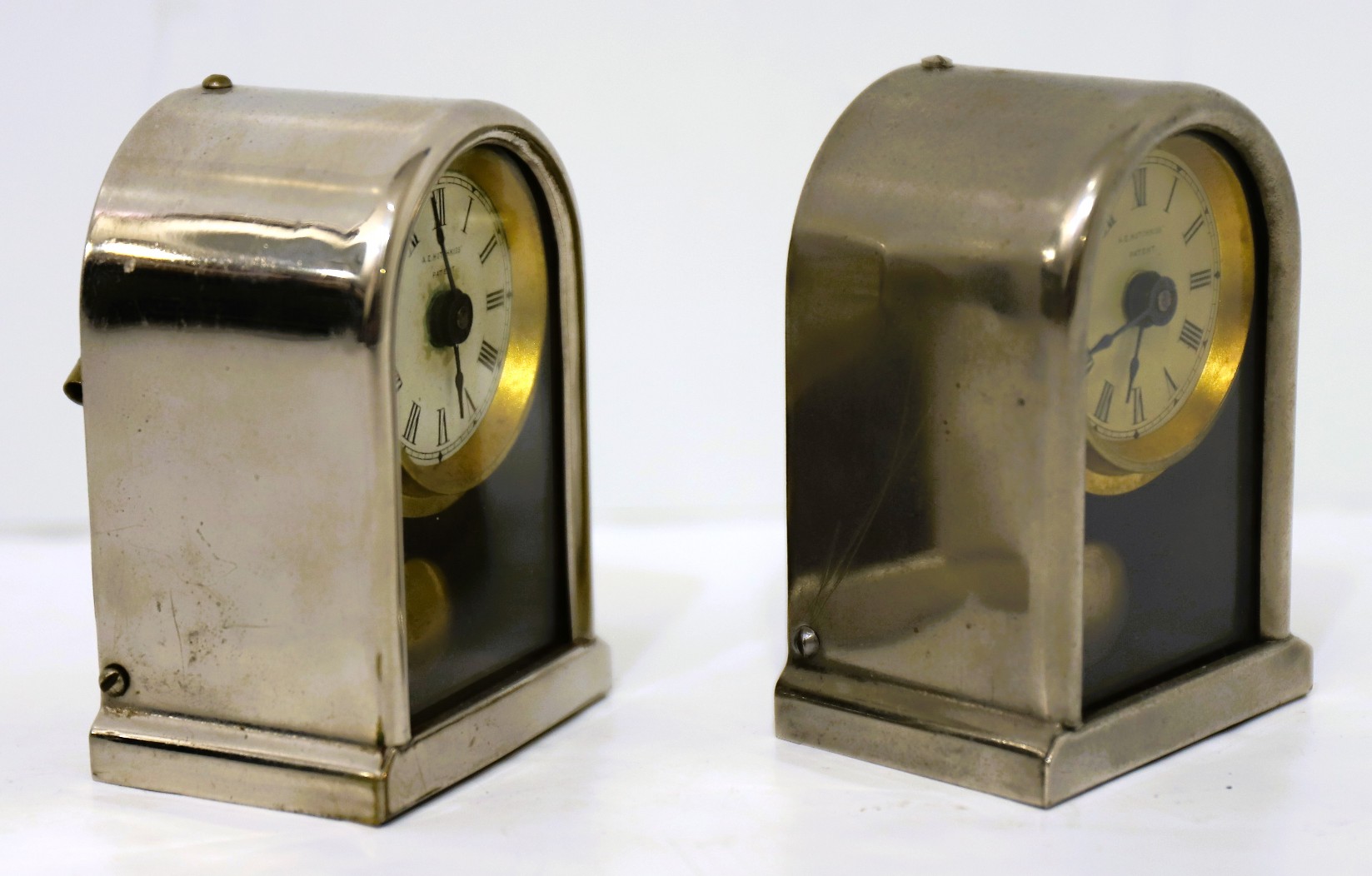
3-inch nickel-cased clocks, with an attached pendulum, are perhaps the most common clocks found today by this company. They
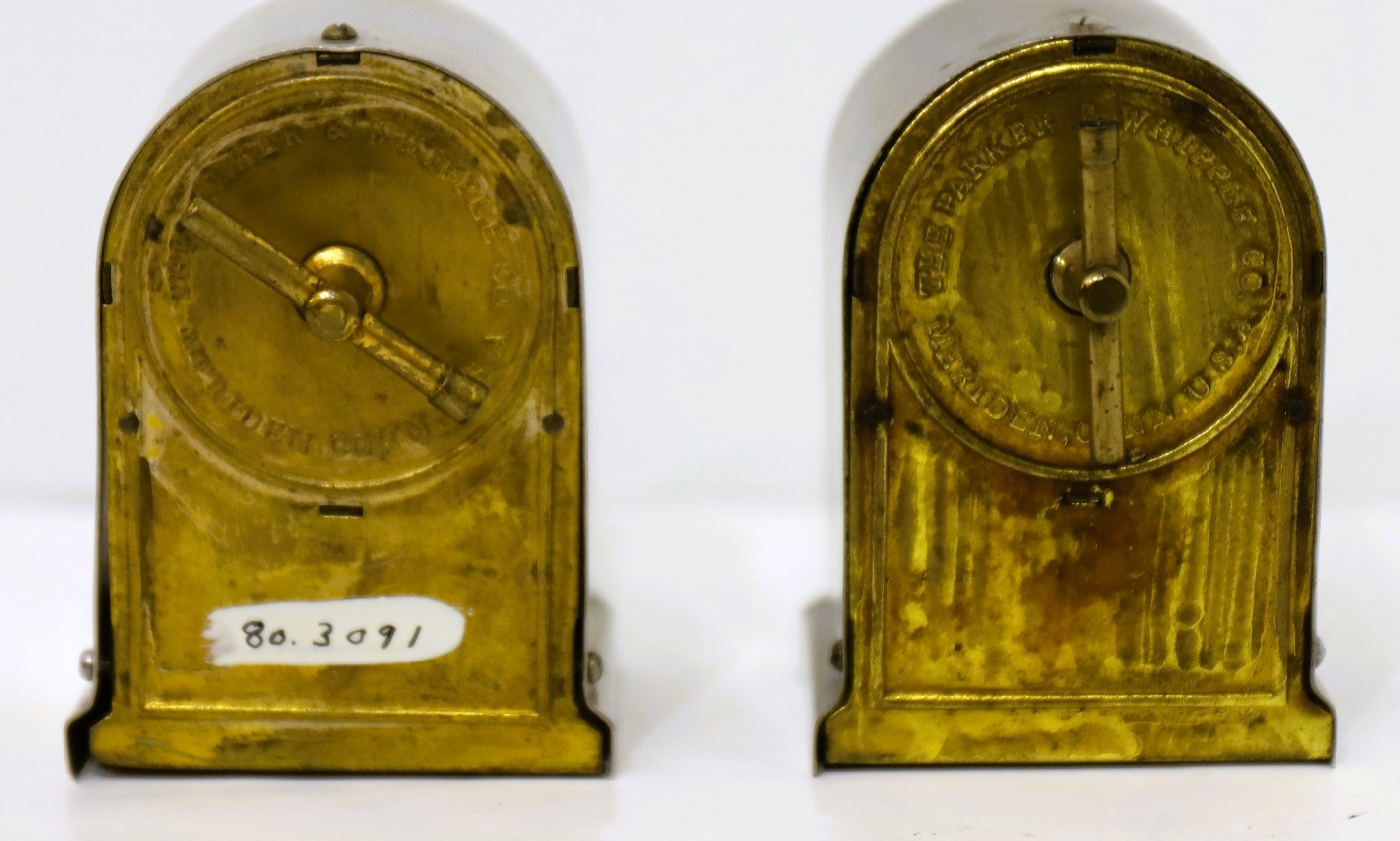
are fully enclosed, with a glass in front over the paper dials and a brass cover on the back that bears the name of the company and
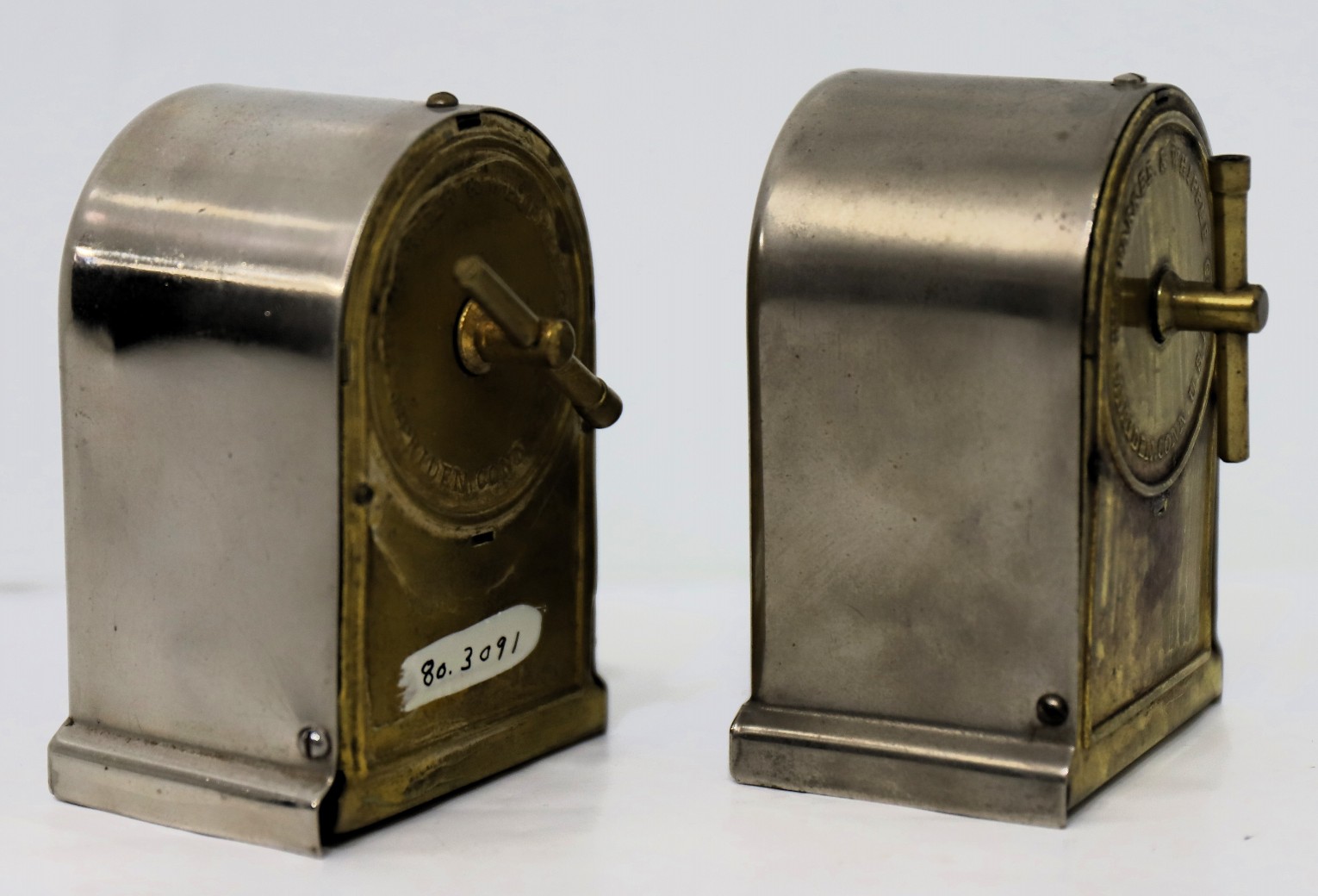
its location. Patent information is stamped into the bottom. There is a single winding arbor in back with an attached
handle – easy to wind. So how do you set the time on these guys? The winding handle unscrews from the back, and one end
of the handle serves as a key to move the hands on the hand shaft that is exposed when you remove the handle. Ingenious! They are one-day clocks. Neither of these will run: the one on the left (A) winds but immediately discharges as the hands spin
around the dial, while the one on the right (B) winds but refuses to tick for more than 10 seconds. The nickel cases are in
good condition with some oxidation; both have old glasses and reasonably good paper dials with proper hands. The P&W Co
was bought out by another Parker, Charles E. (no doubt a relative of John E.) , in 1893; he had been an investor in the company, and
changed the name to the Parker Clock Co. The new company expanded their product line and made many small novelty and alarm clocks
until 1926. Each clock starts at $25; indicate which clock you are bidding on (A or B, or either) on your bid sheet. $25–$100.

Antique American Clocks JULY 2026

