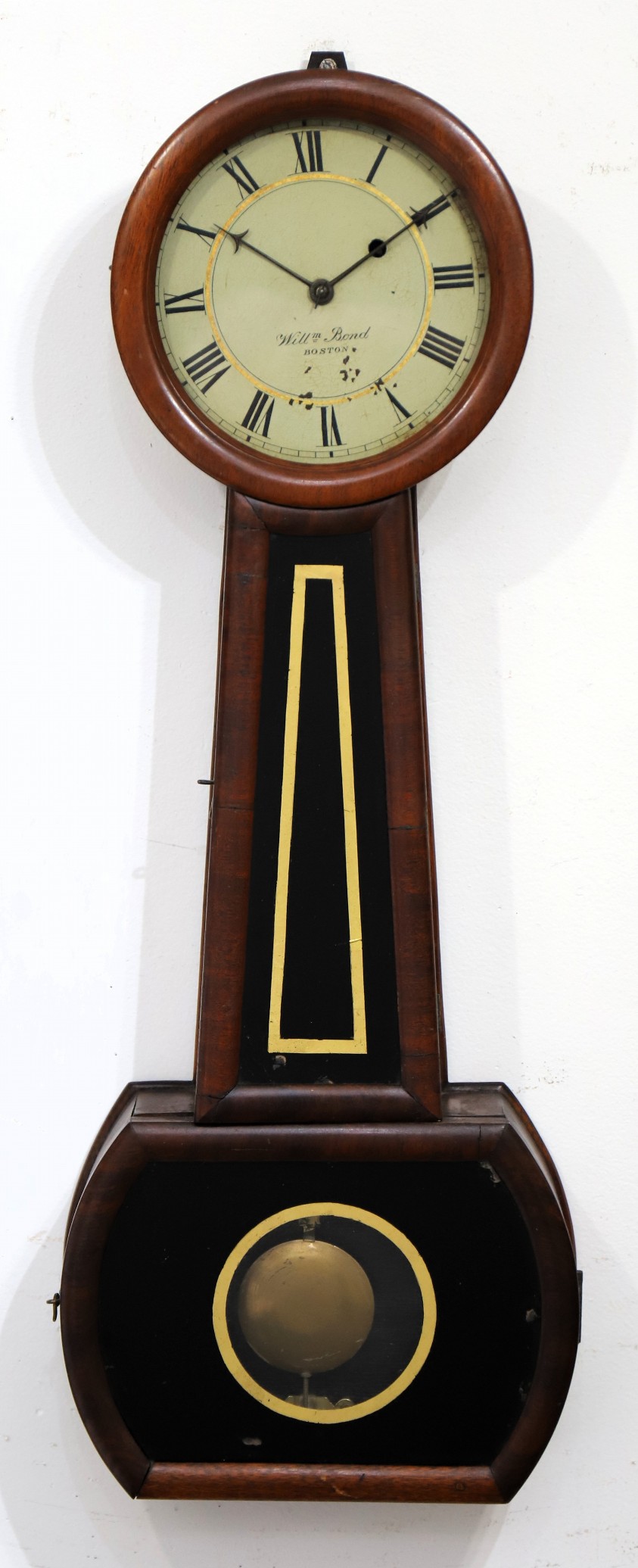
204. $250
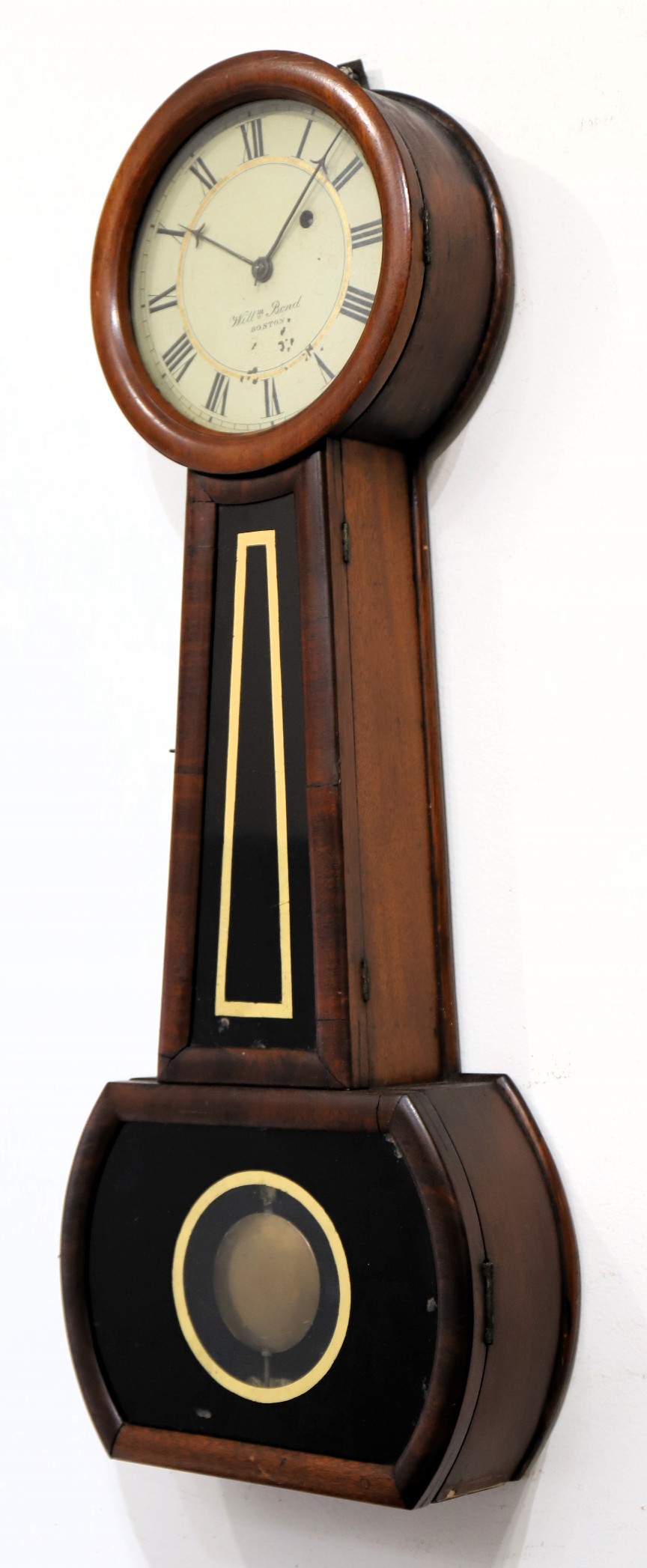
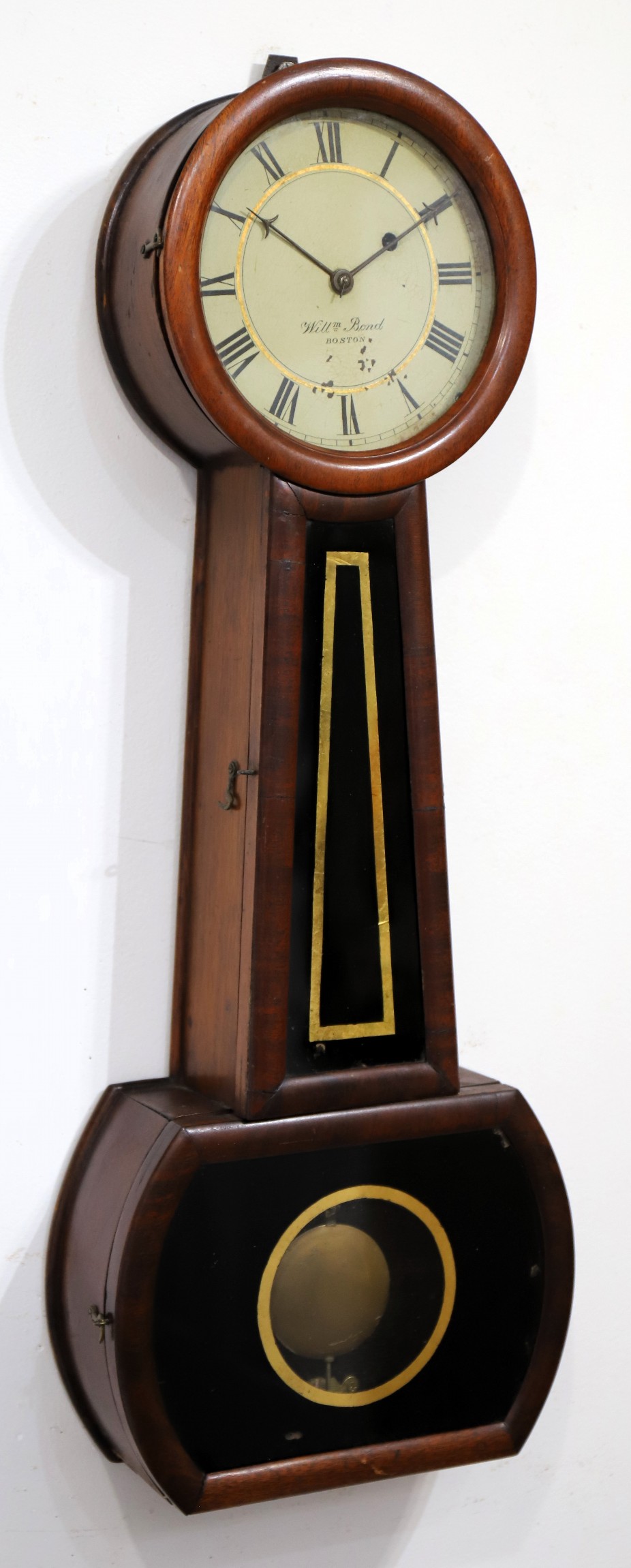
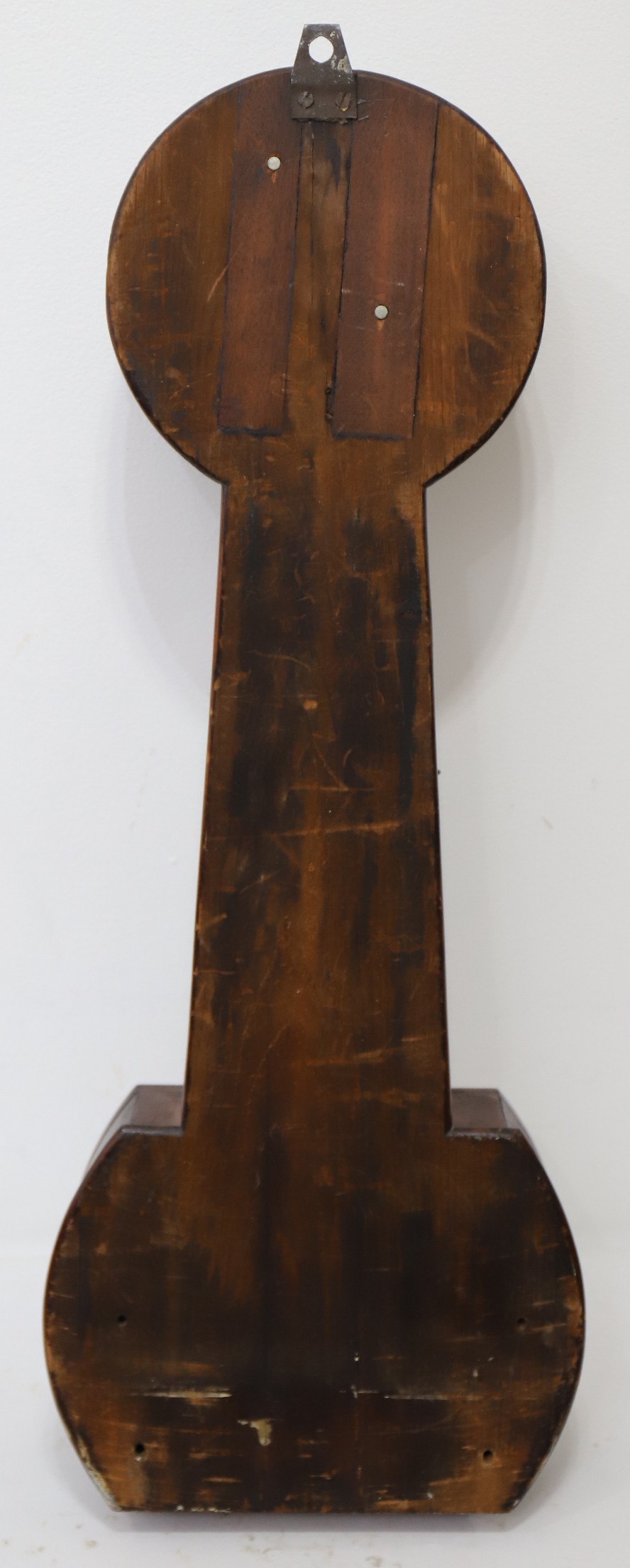
Wm. Bond Boston banjo, ca. 1850. A 29.5-inch North Attleboro-style
“No. 5” cherry case with mahogany veneer on the half round trim around the throat and lower door. The wooden bezel around the
dial lacks veneer and may have been grain-painted. The three glasses are old but the dial glass may be a replacement; the lower
glasses retain good black and gold tablets and are backed by cardboard. The throat glass and frame are mounted on two hinges,
with a hook-latch on the left. There are hook latches for the dial bezel and lower door as well. The bottom of the case
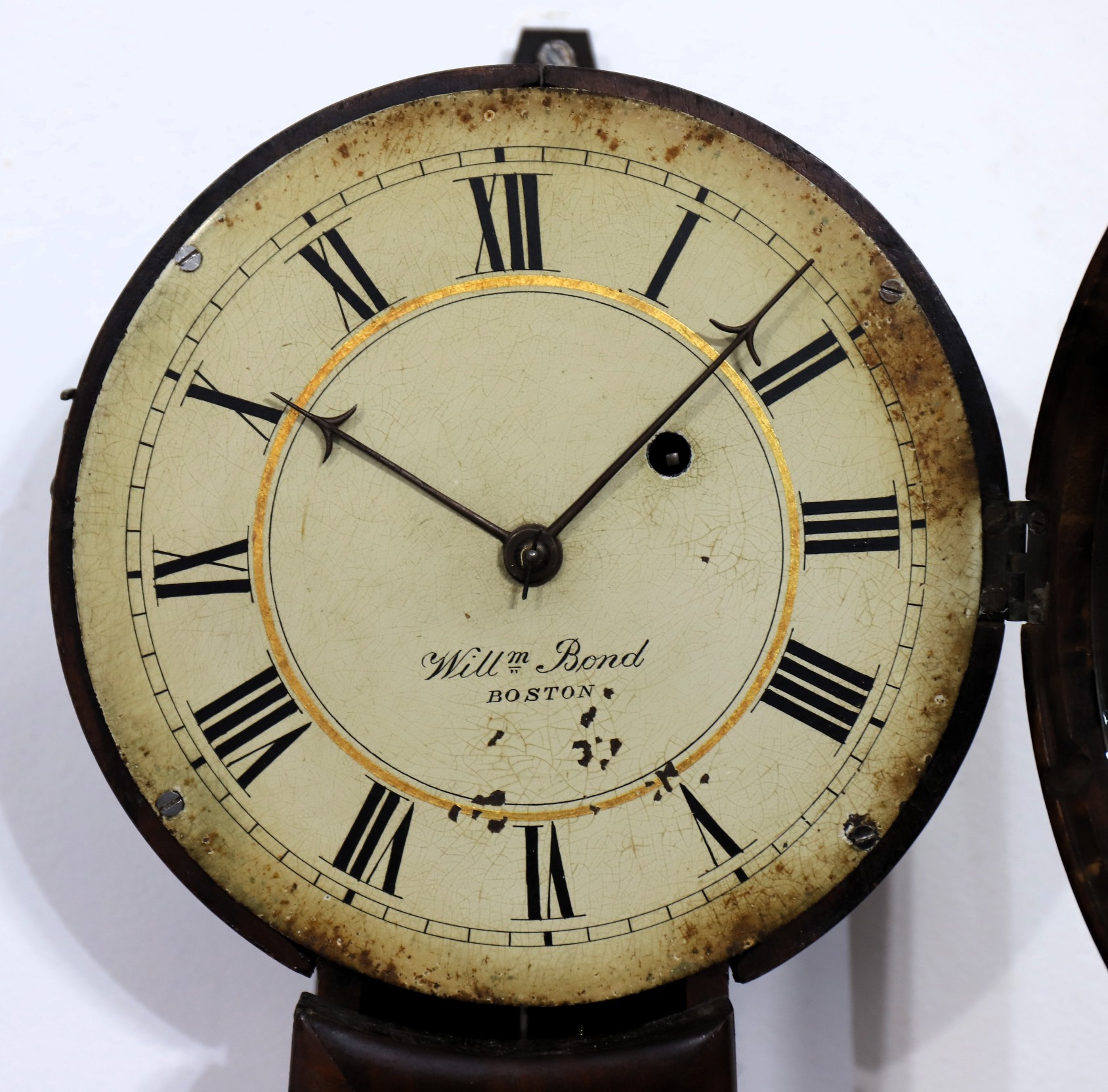
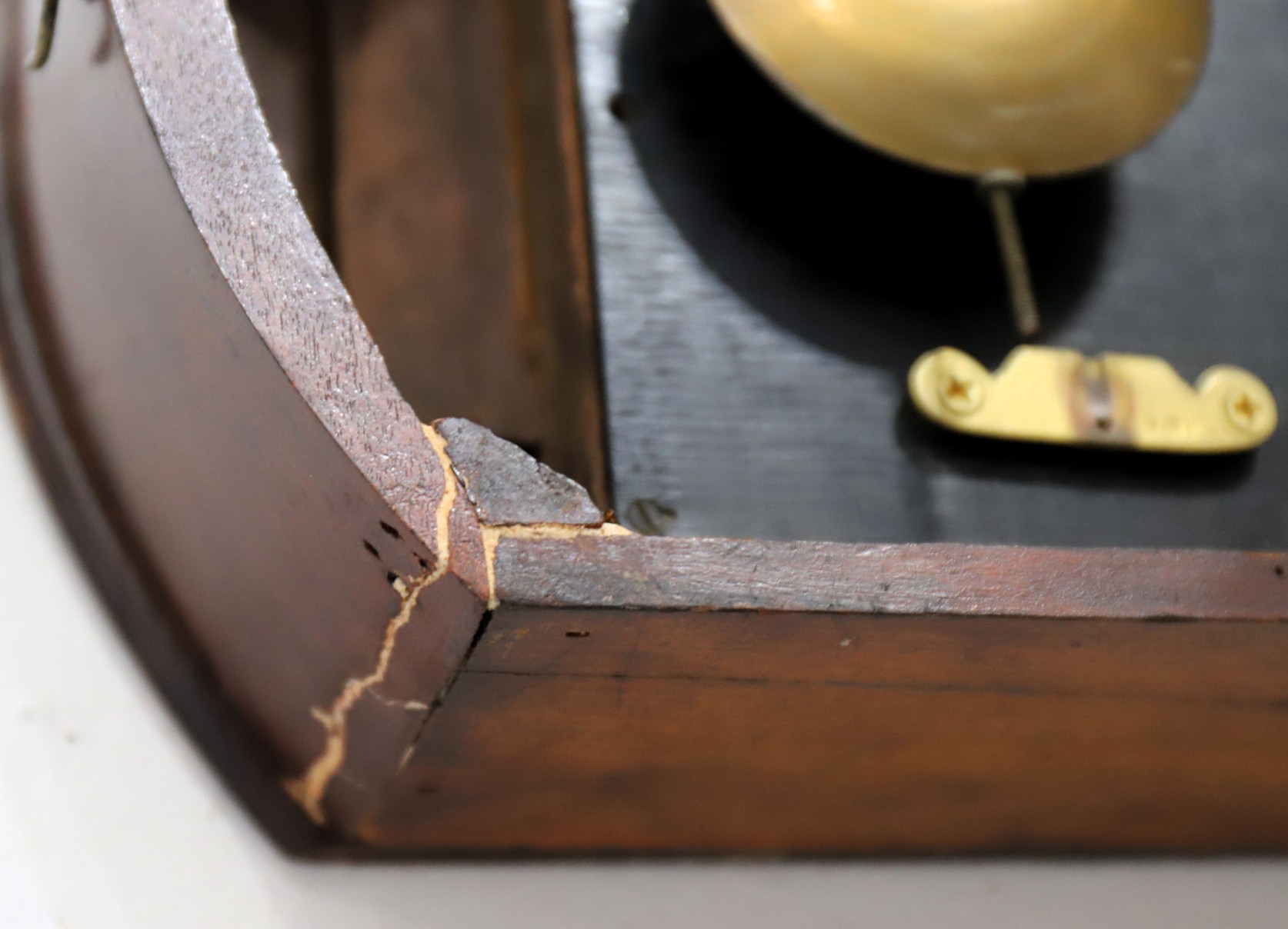
has been broken out by a weight fall and poorly repaired. The iron dial holds old/original paint and numbering, with a gold
ring inside the Roman numerals and “Will m Bond Boston” below the mainstem. The dial is mounted with four screws and there are
finely carved iron barbed arrow hands; the presence of additional mounting holes behind the dial suggests that this may not be the
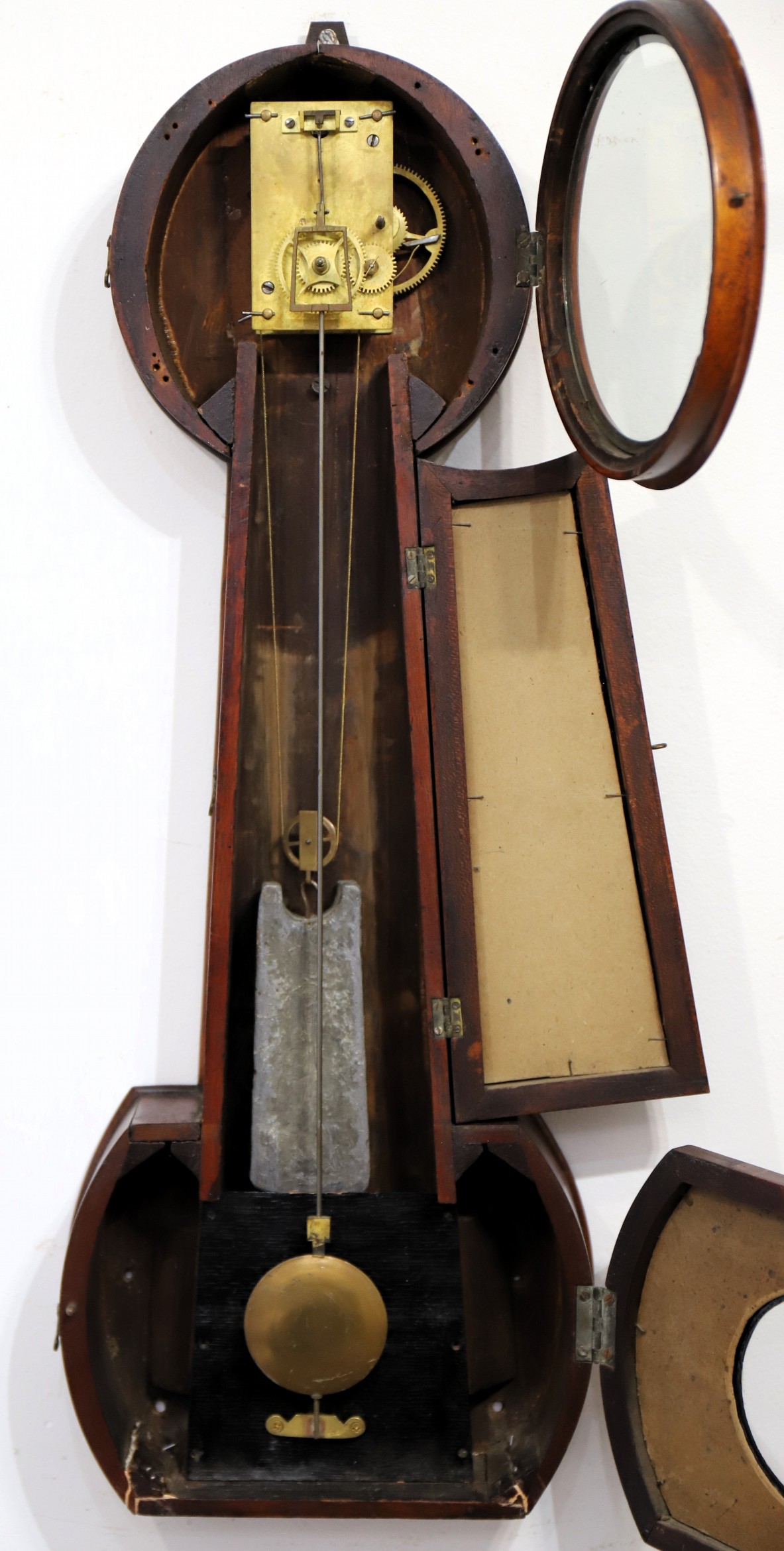
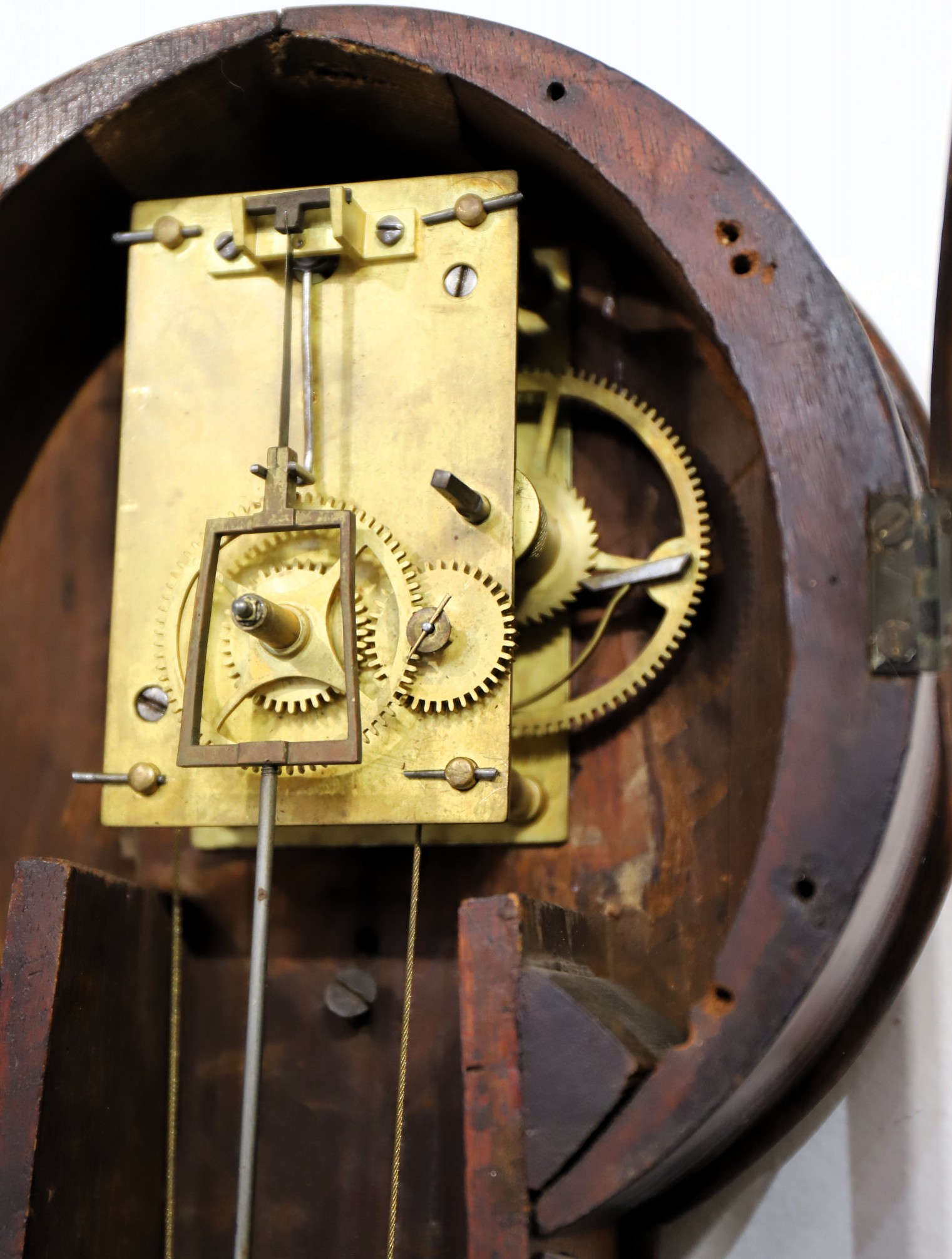
original dial. The banjo timepiece movement mounts with diagonal fillister screws and has a T-bridge suspension, recoil escapement,
a straight click pawl, and a steel rod pendulum with a keystone at the top and a brass bob; it is running nicely. The weight
is lead with a brass pulley, a wooden weight shield, and a tie-down lacking a clip. Very simple glue blocks. There are
some unusual and early characteristics here for an 1850’s production banjo: the T-bridge suspension, lead weight, a hinged throat
piece, gold ring on the dial with carved iron hands, and backing on the glasses, all of which appear to be original. The large
opening in the bottom glass is also unusual. William Bond was a noted English clockmaker best known for chronometers, but he
and his sons ran a shop in Boston from 1798 to 1858. Bond died in 1848. It is unclear why this clock bears his name only,
as the business was listed as Bond & Son by 1813 and as Bond & Sons by 1844. $250–$500.
Antique American Clocks January 2026


Looking for an easy way to save the clocks you like?
Here's an easy way to keep track of your favorite clocks: Open/download the Bid Form PDF onto your computer (it should open in a new window) and type in the clocks you want to save. Right click to 'save as', or click the download arrow in the top right corner of your browser window, and you can save the filled-in form on your computer - I recommend your desktop. It will be easy to find and you can open it any time to add or subtract clocks from the list. When you are ready to go, your bid form will be too!
Antique American Clocks - What's not to like?