jan26_overview_4008009.jpg

157.           $100

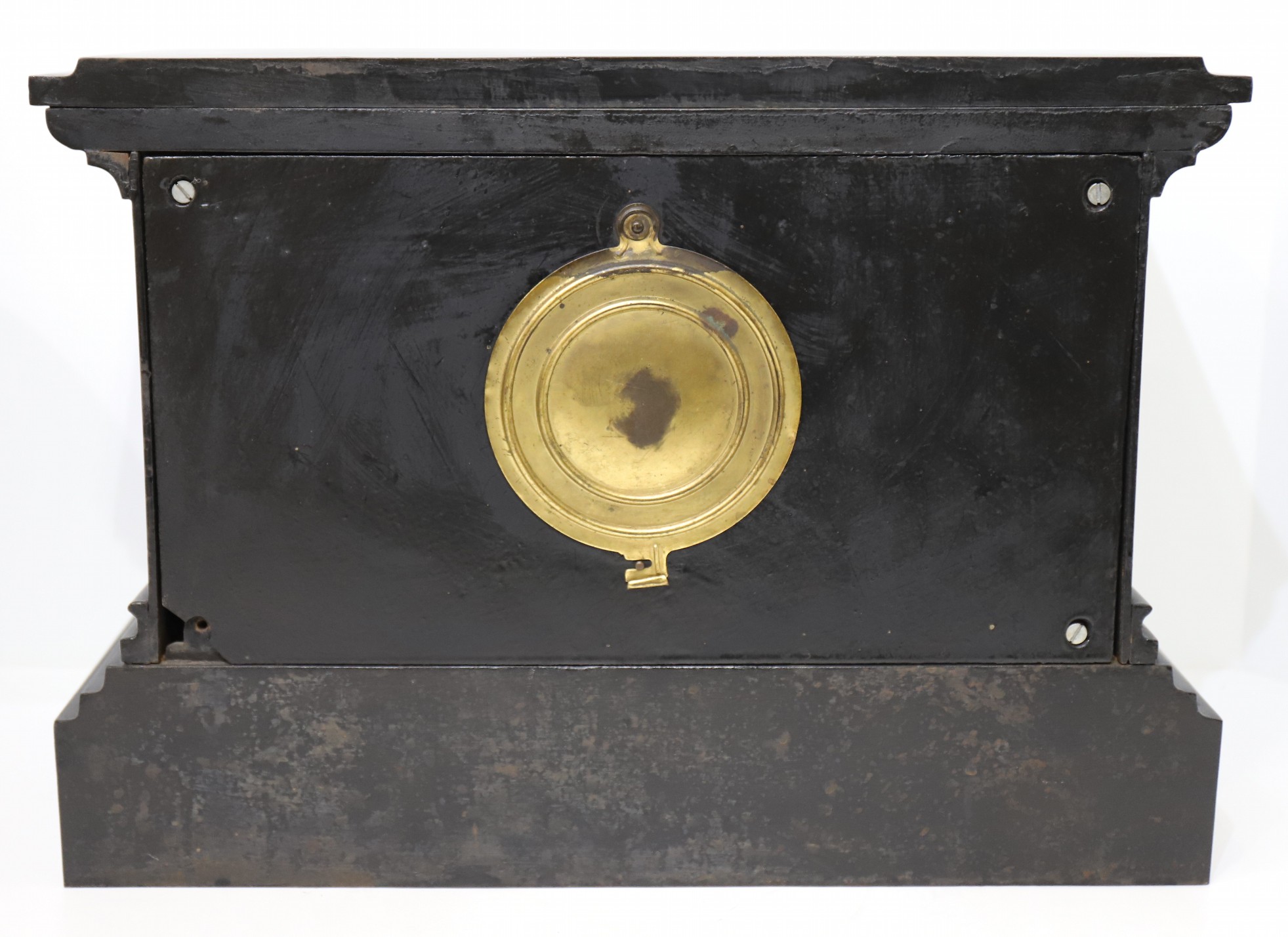
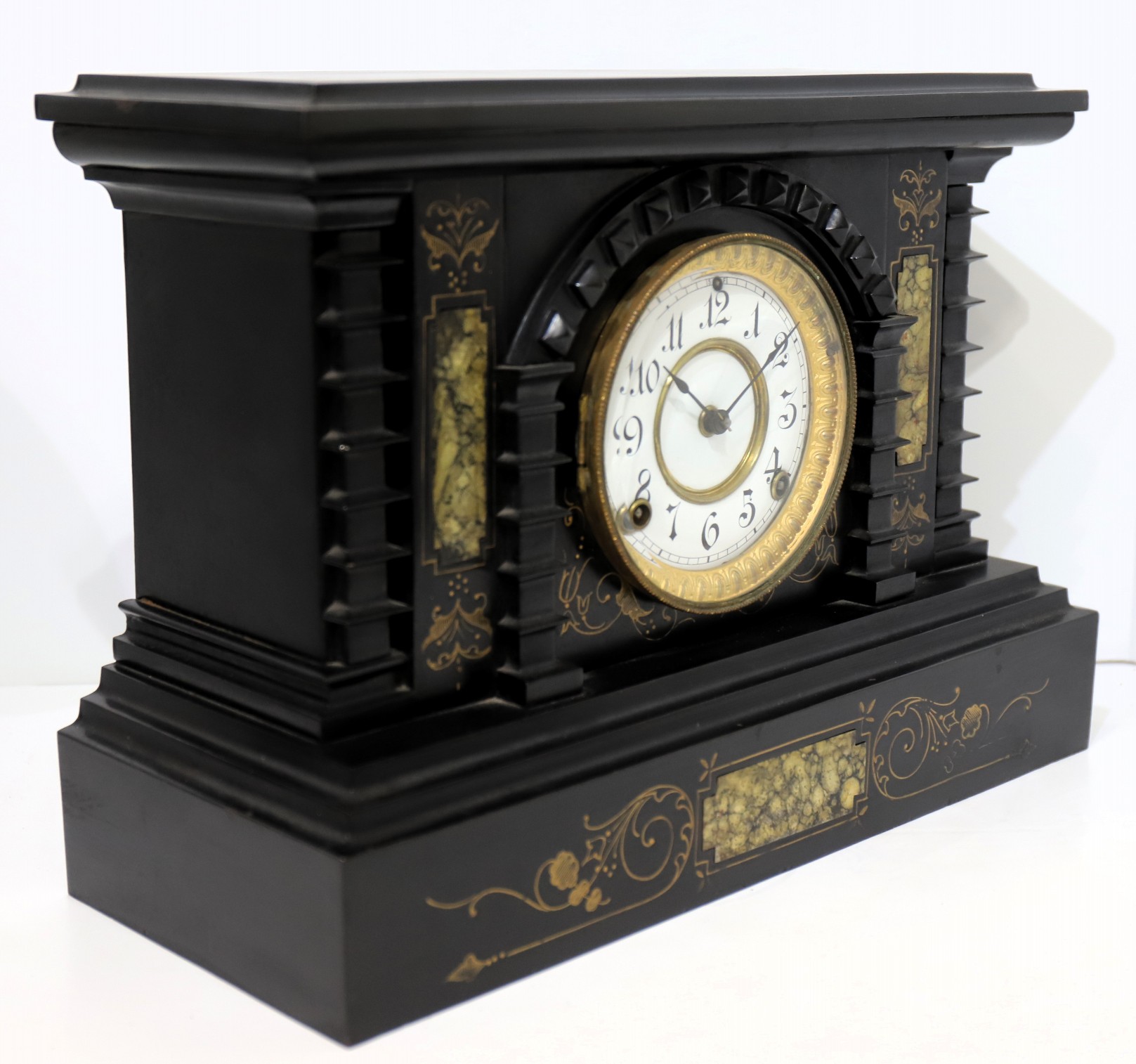
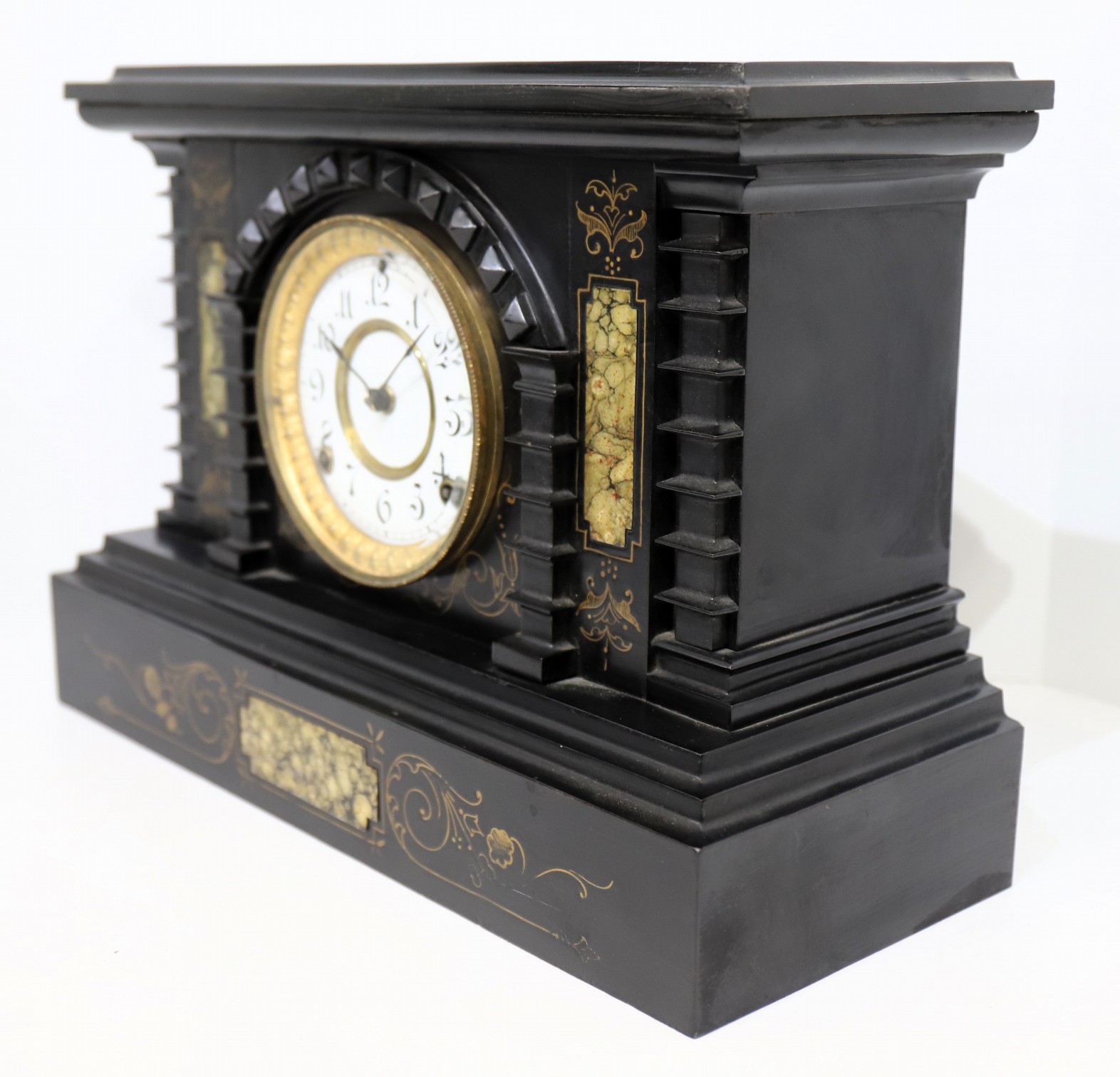
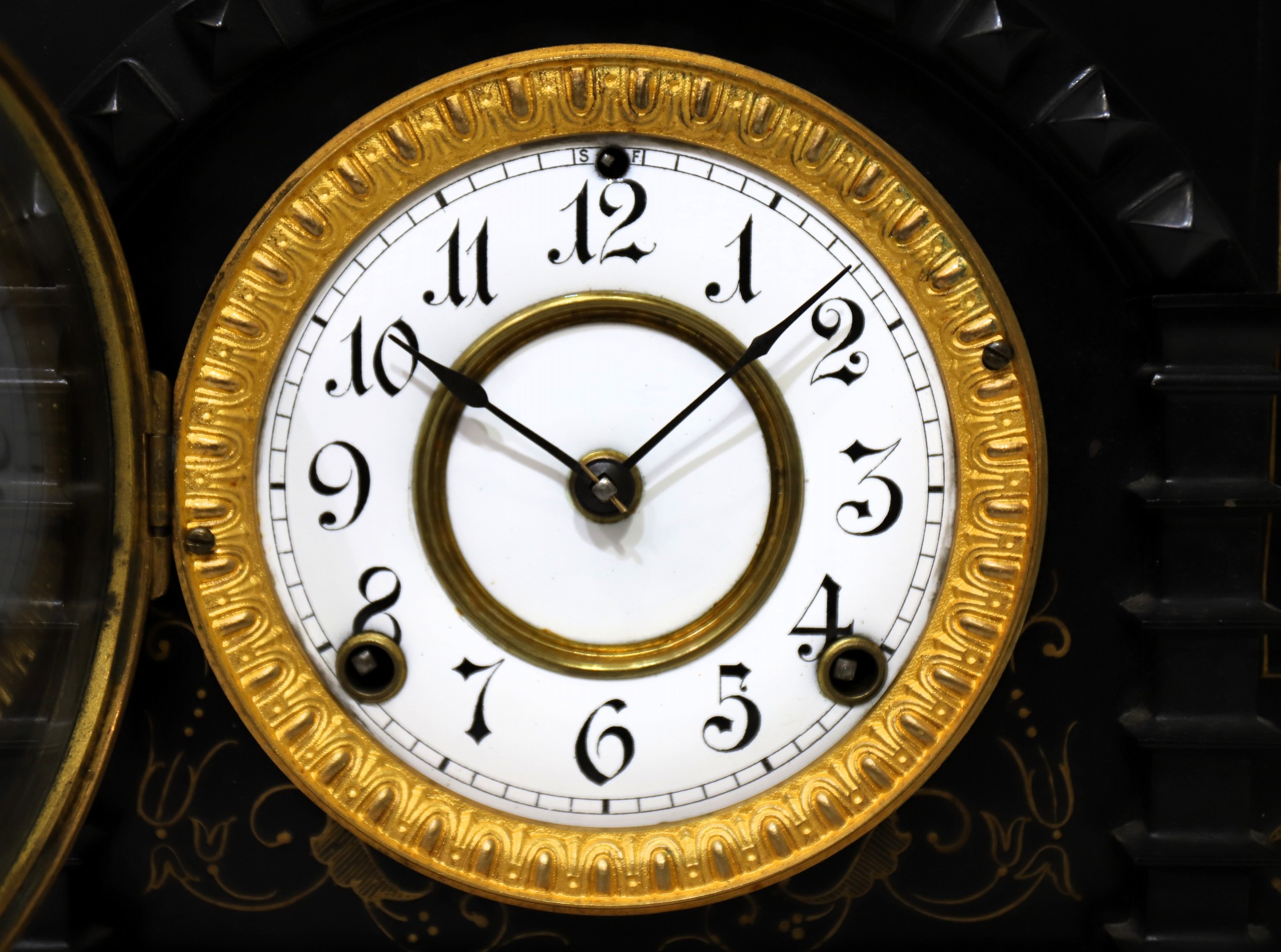
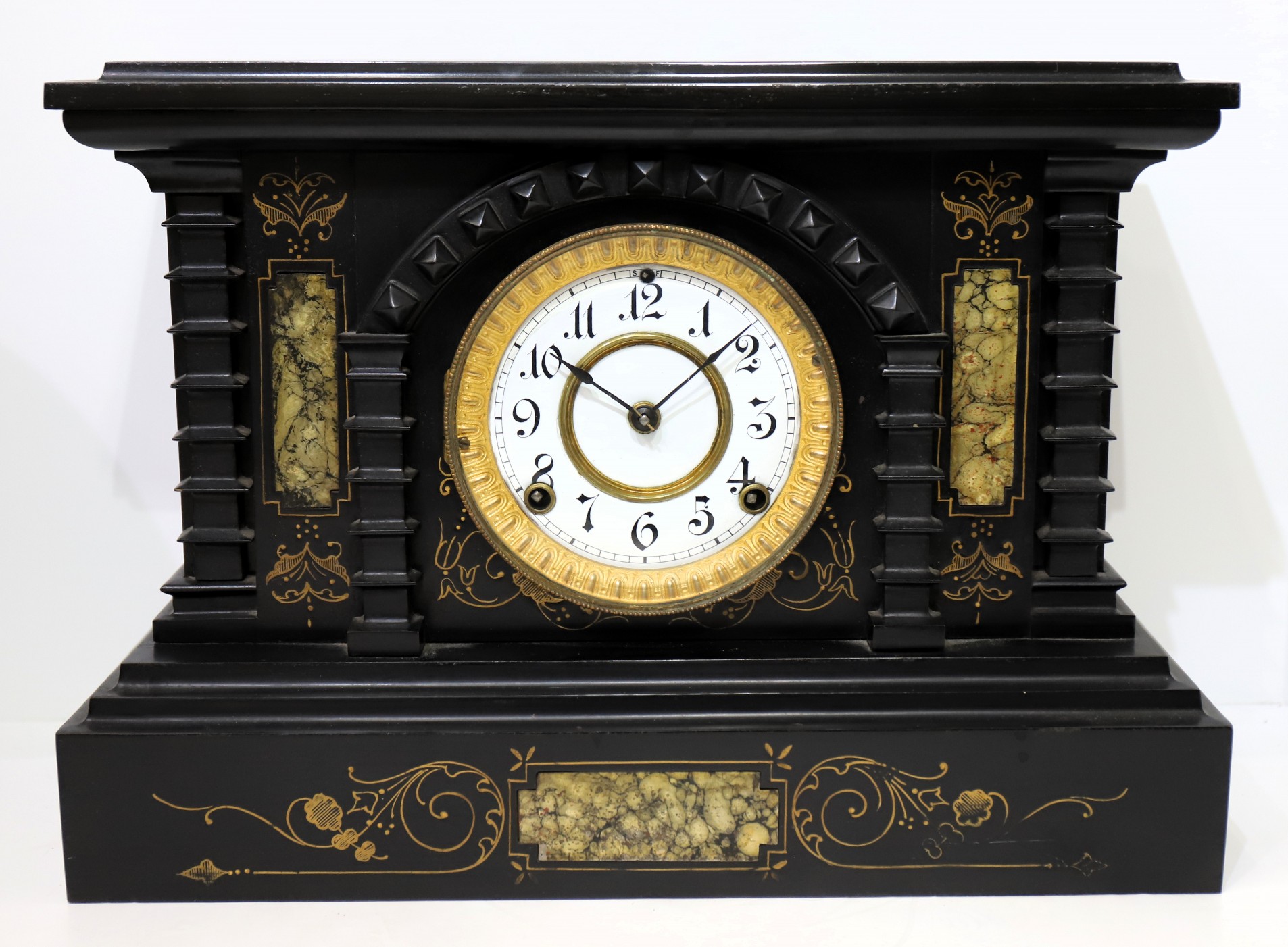
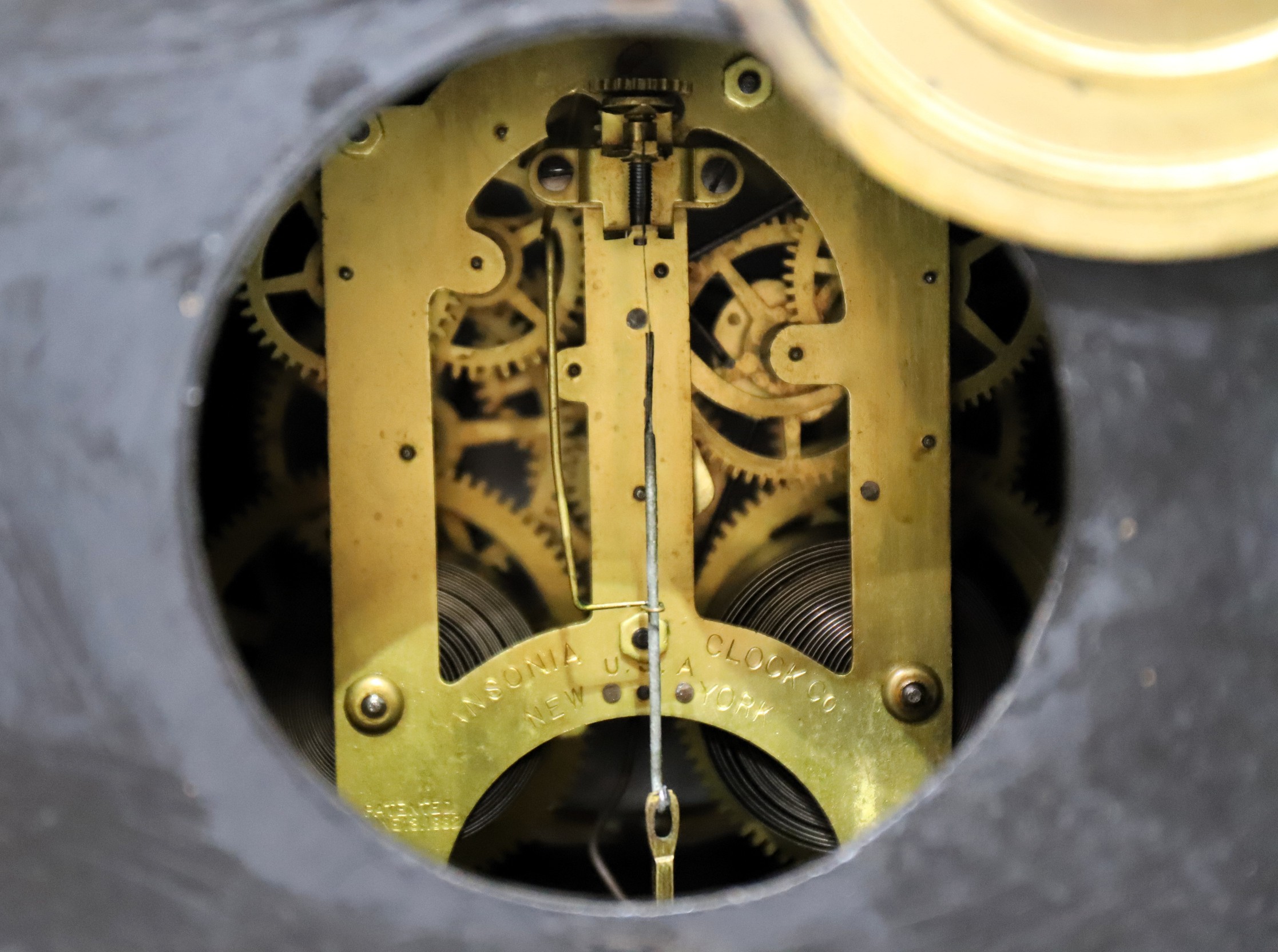
Ansonia Clock Co. “India”, ca. 1886.  This is an impressive, enameled iron-case clock from the company that loved black mantel clocks.  The case is almost 17 inches wide by 12 inches tall with a clean, polished finish that made me think it was marble.  Indeed, note the marble inserts on the sides of the dial and on the base, and the original gilded incisings.  The flat dial glass is beveled, the dial is iron made to look like porcelain, and the hands are Ansonia.  The 8-day, time and half-hour strike movement is signed and running, striking on a cathedral gong. One sale at Schmitt Horan in 2020 for about $125, it was missing a marble inset panel.  $100–$200.
jan26_overview_4008008.jpg jan26_overview_4008007.jpg jan26_overview_4008006.jpg
 
 
jan26_overview_4008005.jpg

Antique American Clocks                    January 2026

jan26_overview_4008004.gif jan26_overview_4008003.gif jan26_overview_4008002.jpg jan26_overview_4008001.jpg
BID INCREMENTS
 
I use the following bid increments to assign the final sale price.  If your winning bid is less than one increment over the second highest bid, you are assessed your full bid amount.
 
   BID                     INCREMENT

$1-$249                       $0            The bid you place is the price you pay –                                                       no increments applied
$250-$499                   $25
$500-$999                   $50
$1000-$2499               $100
$2500-$4999               $250
$5000-$9999               $500
$10,000 >                    $1000
 
If you are the only bidder and you bid less than $250, you will pay your full bid amount if you are the winning bidder; if you bid more than $250, you will get the item for $250 or the minimum bid price, whichever is higher.