115. $100
Seth Thomas Clock Co. “Dover” with “Winward’s Double Alarum”,
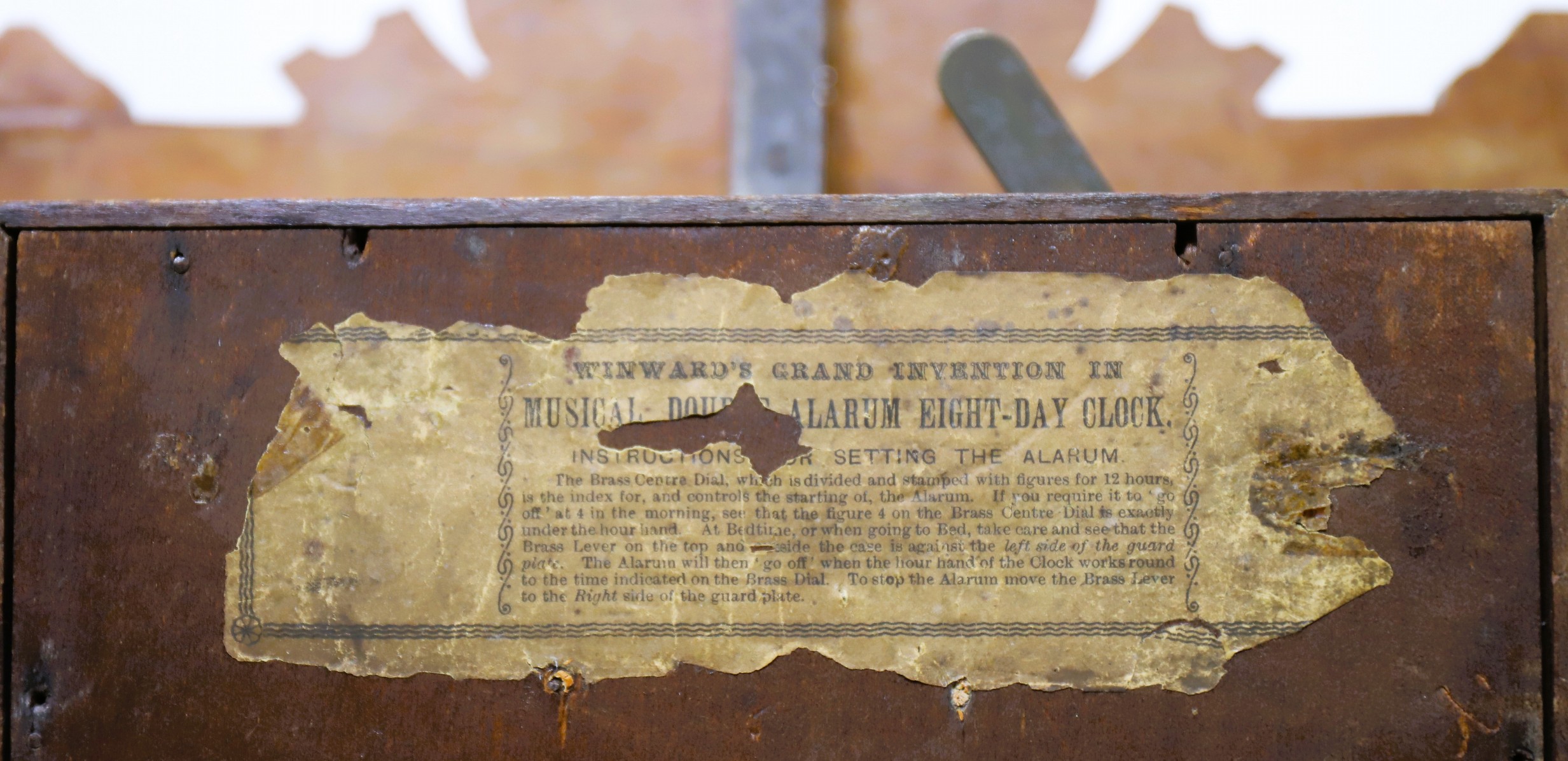
1892. I’ve never seen an alarm like this before and it took some time to figure it out, even with the instruction sheet on the
back. Yes, it is spelled “alarum”. I found two similar examples on the internet, both with this alarm system on a Seth
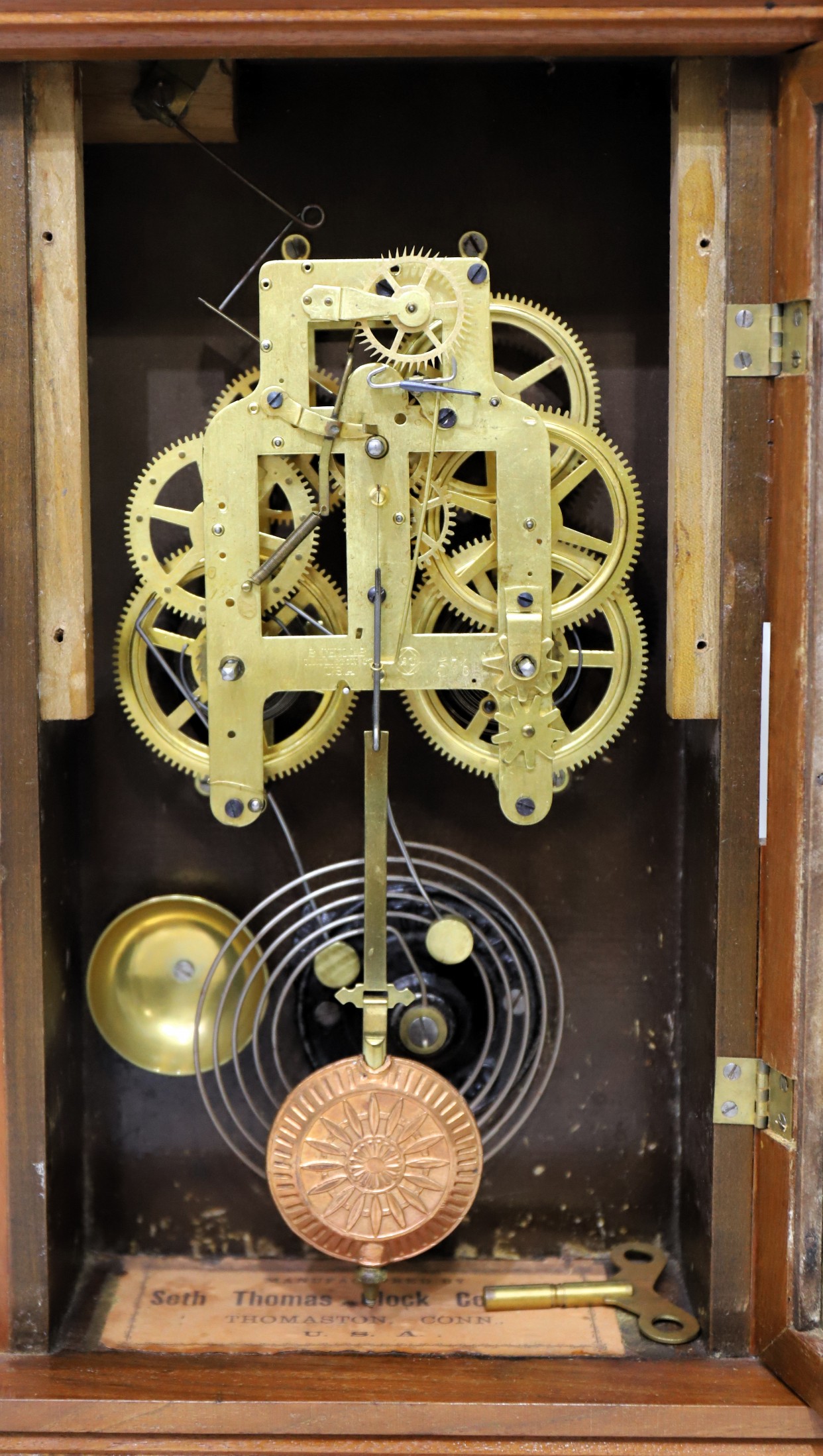
Thomas Dover model, apparently the only model that it was installed on. I suspect it was a collaboration with Seth Thomas. The alarm works by taking over the strike chain and replacing it with a single on/off strike function: when the alarm is triggered
the strike chain is released and it strikes a wire gong until it has wound down, or the on/off lever on top of the case is switched
to off (by moving the lever to the right). It is a “double alarum” because an arm from the strike chain also extends to a brass
bell in the bottom of the case and it strikes as the former(?) strike count wheel turns as the strike chain unwinds. This creates
a cacophony of rapid wire gong and bell strikes that could easily wake the dead. The alarm parasite has taken over the hourly
strike mechanism! There is no hourly strike on this clock, just an alarm which you can choose to use, or leave silent.
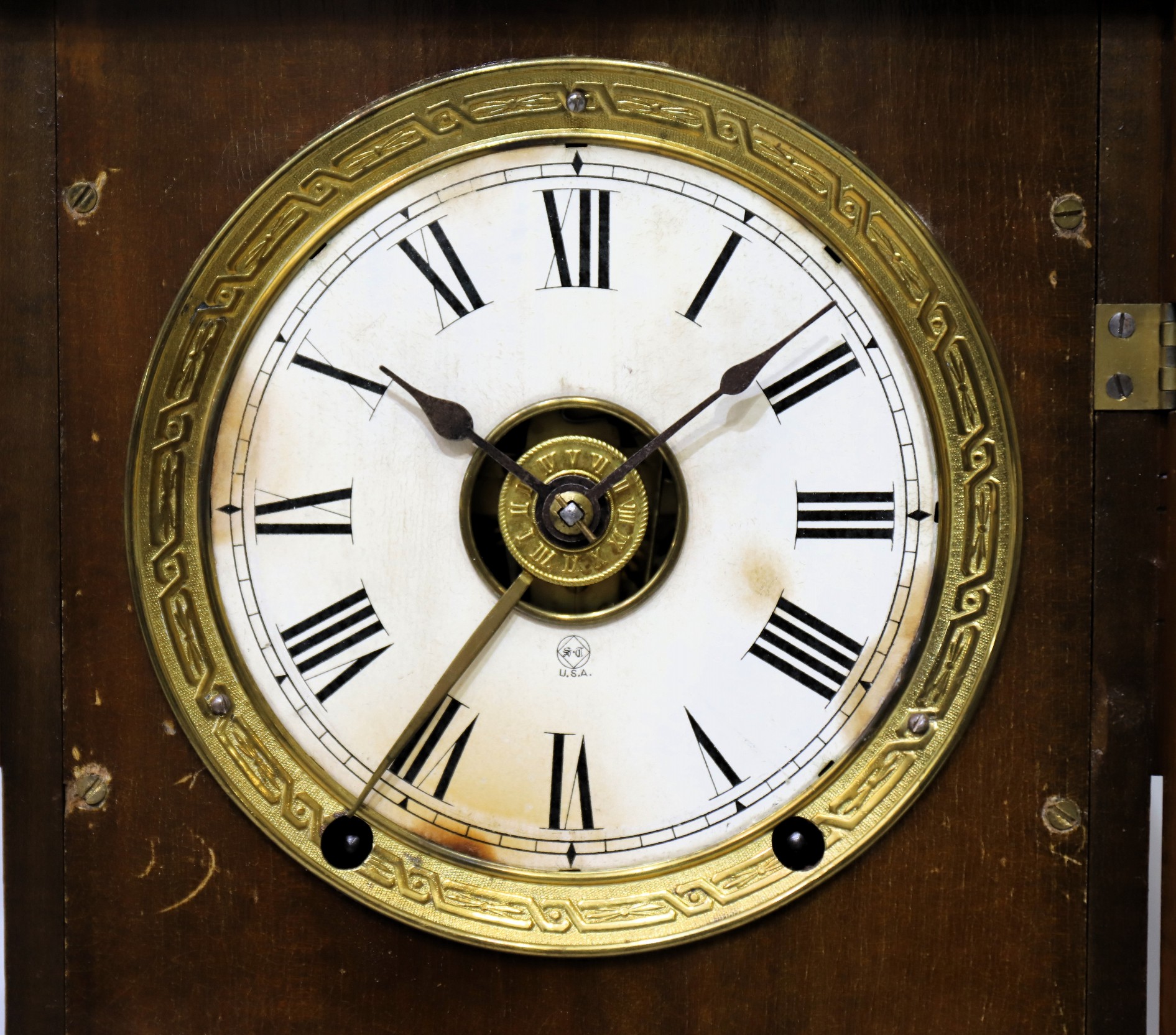
The alarm is set by moving the standard alarm ring on the center post such that the time you want the alarm to ring is directly under
the hour hand (i.e., if you want the alarm to ring at 4 am you put the “IV” number under the hour hand). This moves the brass
ring pointer arm to a position that, counting counter-clockwise from 12, is the number of hours until the alarm will sound. The alarm ring moves with the hour canon, and when it reaches the 12 position it triggers the alarm by dropping an arm and releasing
a hold on the strike chain flywheel. It sounds complicated, and I’m still not sure why it works the way it does, but I’ve tested
it, and it does work. As noted, there is a paper instruction label on the back of the clock. One thing I’ve drawn from
this is that alarms on clocks were a big business in the 1800’s, something we take for granted now.
The 21.5-inch walnut case
has been refinished nicely; the door glass is old with a gold stencil; the dial is paper with the ST logo and some staining along
the edges. The hands are ST issue. The 8-day, time and alarm movement is signed and running, and, as noted extensively,
the alarm is functioning on the gong and bell. There is an ST pendulum bob that has been polished down to copper, and a white
label inside on the bottom. The date of manufacture is stamped on the back. If you want to see an unusual and uncommon
alarm function this clock is for you. $100–$200.



Antique American Clocks January 2026