31. $450
Salem Bridge 8-day
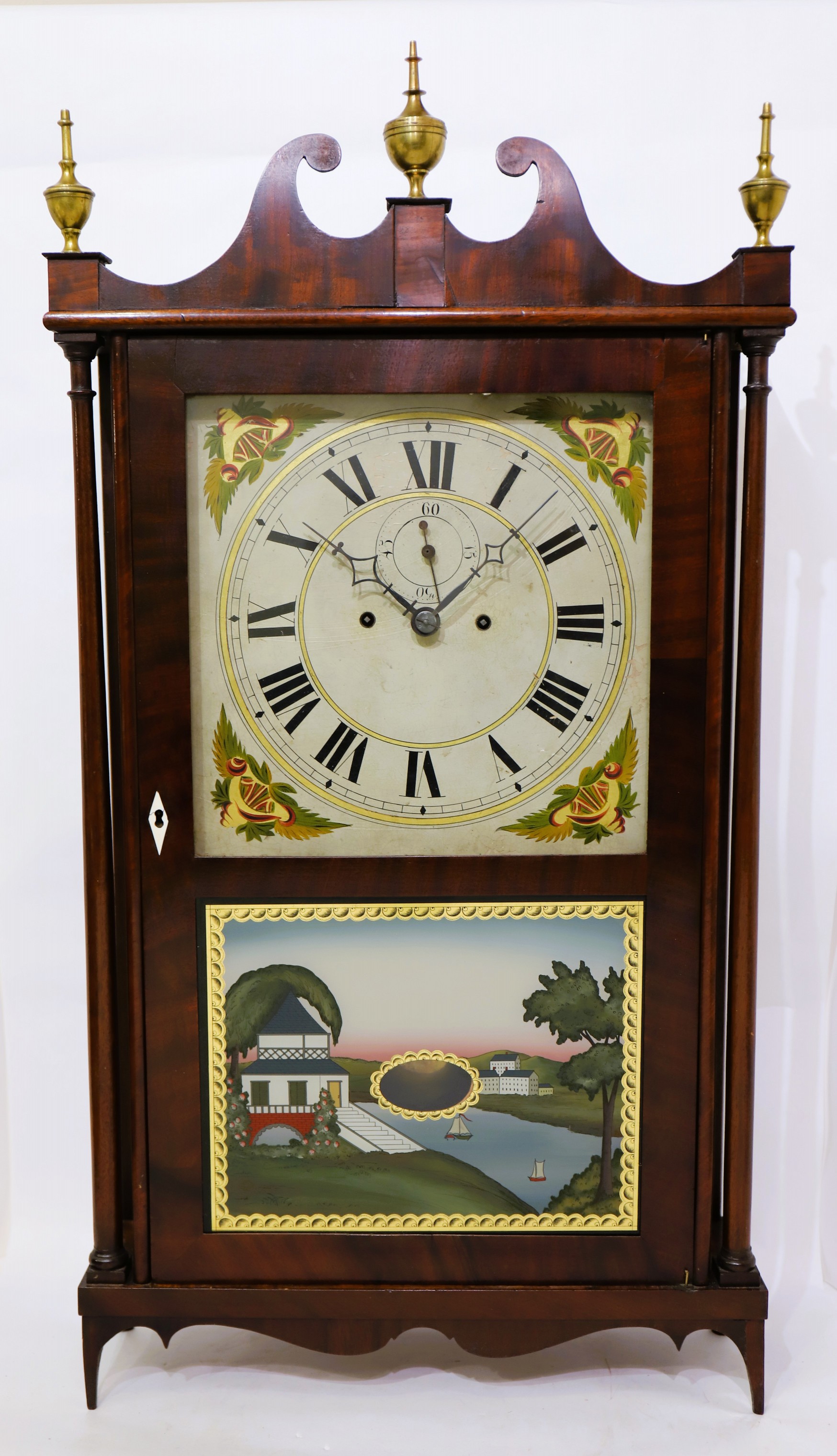
brass movement pillar & scroll, ca. 1820. The maker of this rare clock is unknown, as the dial is not signed and there is
no label. Eli Terry patented a 30-hour brass movement but did not use it, preferring wood movement clocks for economy. Heman Clark worked with Terry and adopted the brass movement, modifying it to run 8 days; this change required compounding heavier
weights on pulleys (as well as changes to the gearing). Clark developed his own case for these clocks, but others in the area
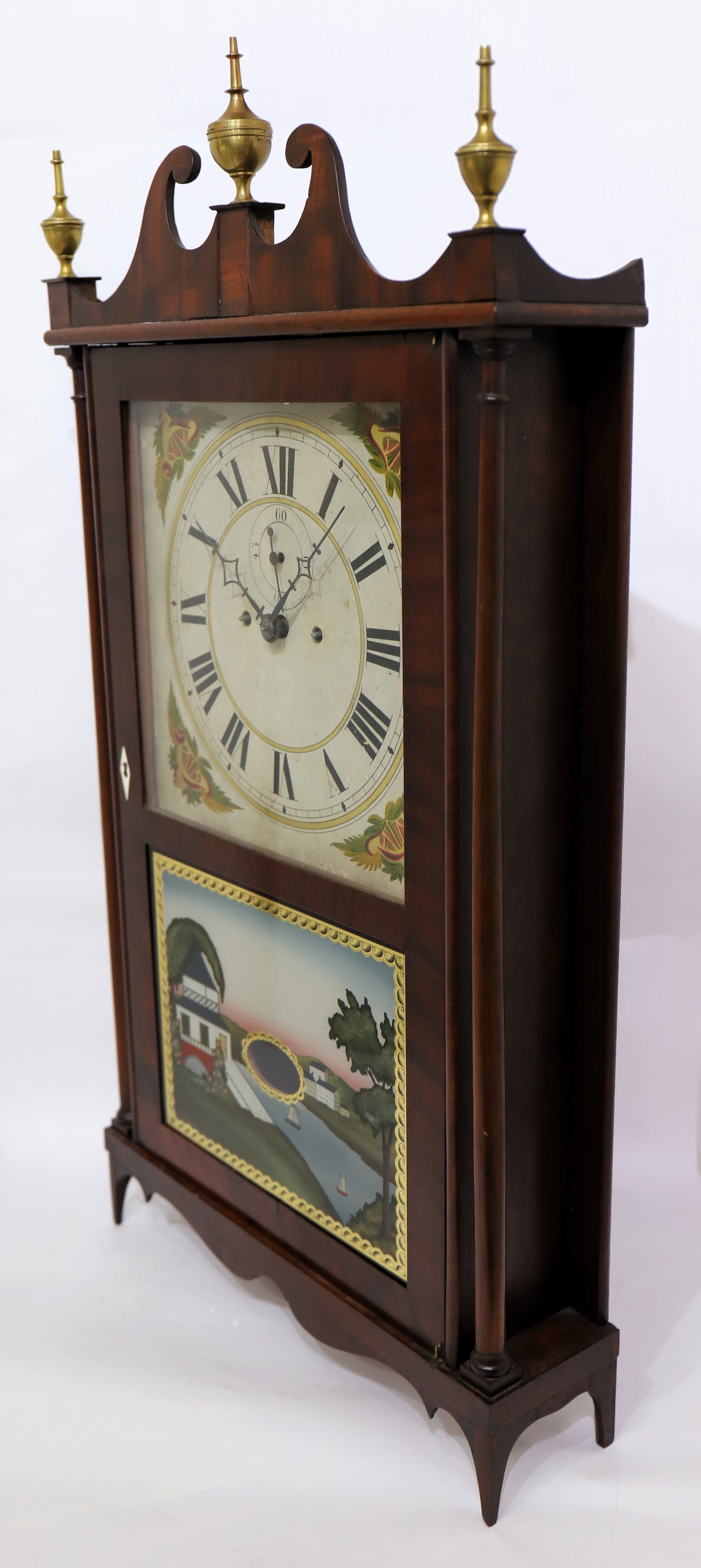
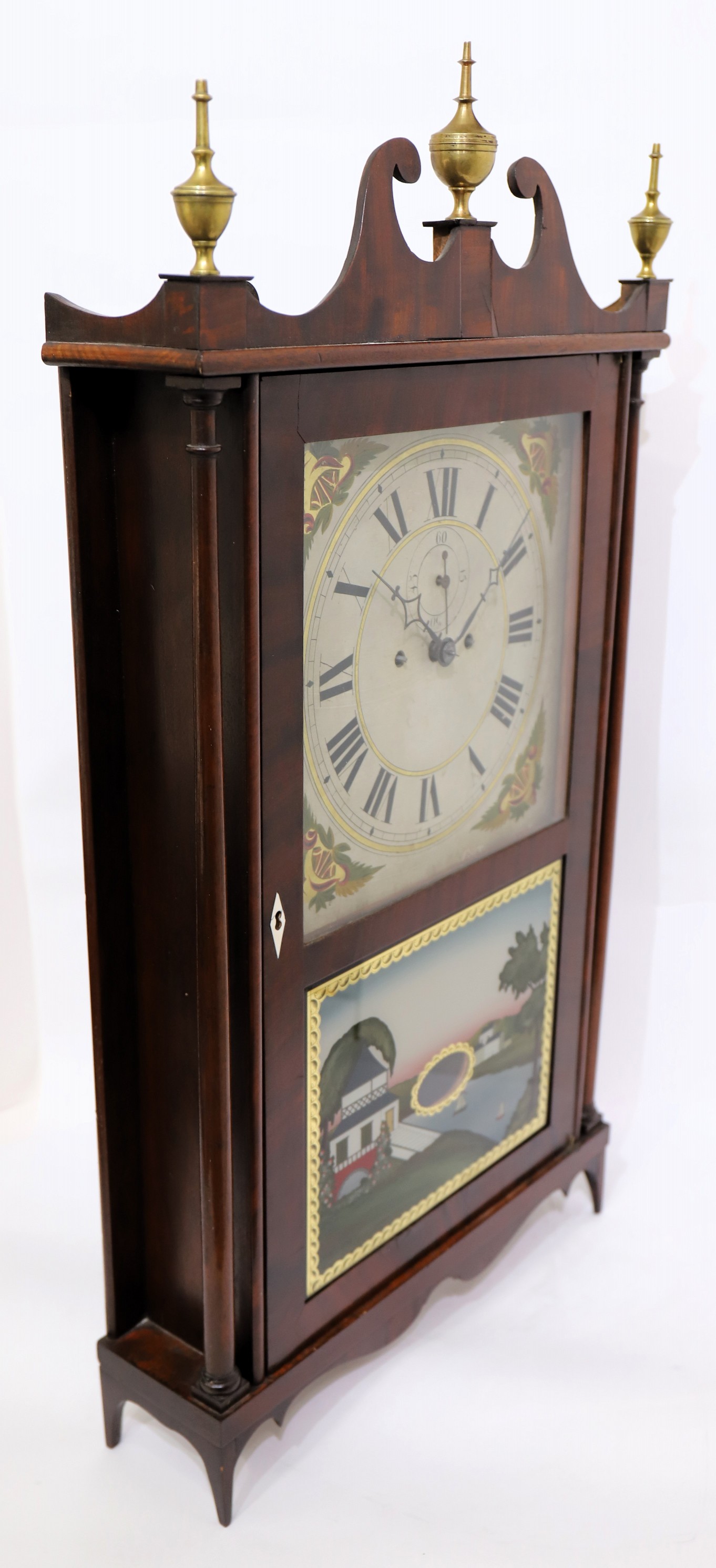
(Salem Bridge, now Naugatuck, CT) utilized pillar and scroll cases being made at this time: this case is 32 inches tall with the center
urn finial and 17 inches wide. Known makers include Lucius Bradley, John White, Sylvester Clark, and others. Nonetheless,
pillar & scroll Salem Bridge clocks are uncommon. The veneer is complete and with a clean finish; I believe the scroll top
and skirt are original, with no repairs. The left feet appear to be replacements; the brass urn finials are on wooden posts
and the center finial is larger than the corner finials. The dial glass appears to be original, the lower glass is modern with
a new tablet, backed by a piece of wood. The dial is iron with the original paint in the decorated spandrels but is not signed;
many Salem Bridge clocks had signed dials. The dial is typical for a clock from this region and includes a seconds bit and dial,
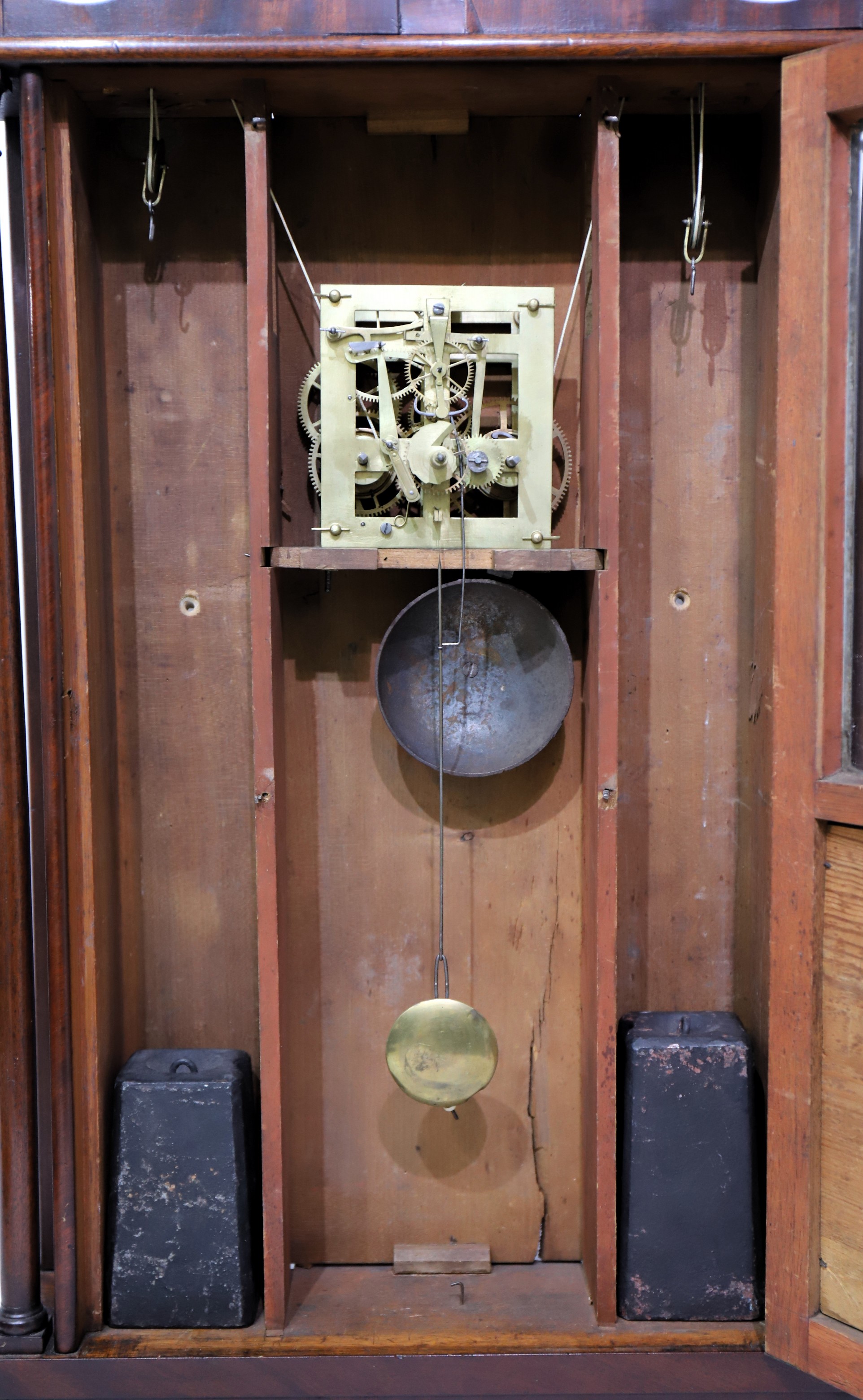
with light soiling and a few chips. The hands are appropriate. The 8-day, time-and-strike brass movement is the standard
movement with rectangular openings in the back plate. These clocks used a rack and snail strike mechanism and ran on heavy,
compounded weights. The weights here are standard eight-day weights and drive the time-and-strike; I tried lighter weights (5.5
lb) and they were insufficient. There is no label, unfortunately. $450–$900.


Antique American Clocks JULY 2024

