26. $1500
Marshall &
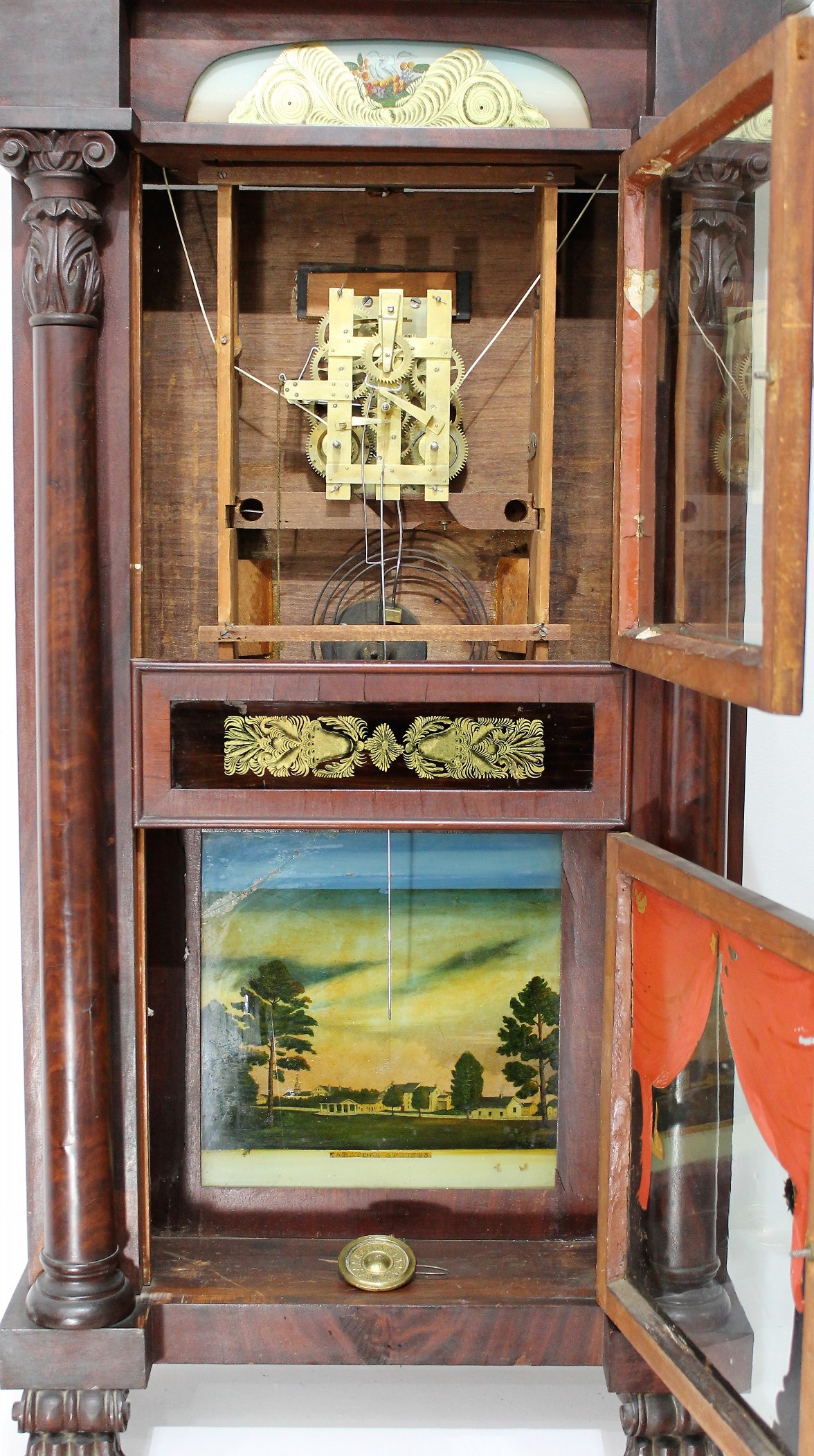
Adams Empire shelf clock, 1834-1836. Chauncey and Elmer worked out of Seneca Falls, NY, midway between Syracuse and
Rochester; Chauncey had the money and Elmer the ability. Elmer bought out Chauncey in 1836 and continued in business on his
own for a year, until the economic crash of 1837 put him out of business. They manufactured both wood movement and brass
movement clocks concurrently, the brass clock movements for the high-end market. Their cases were modeled on those of Asa
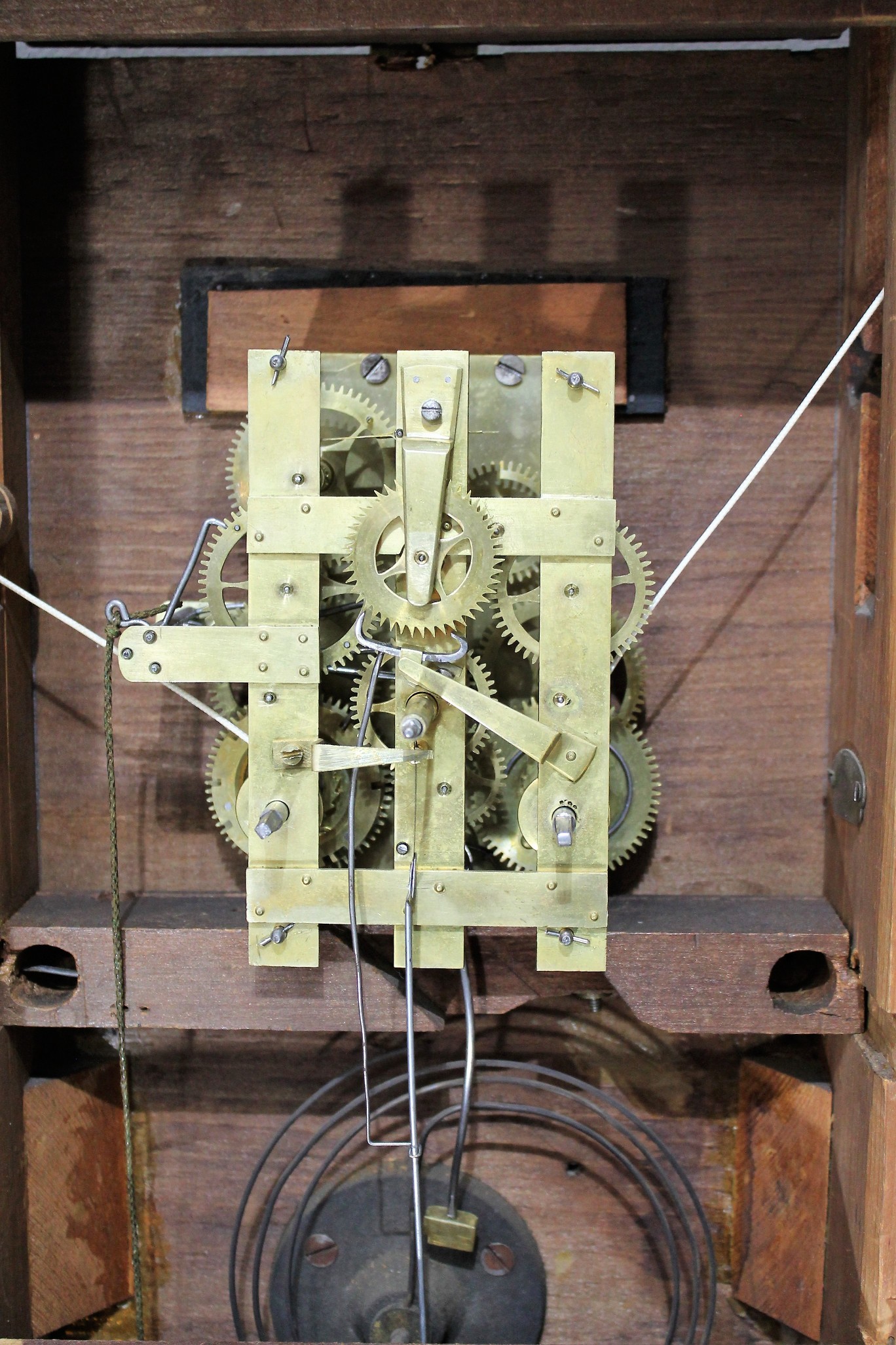
Munger, upstate New York’s most successful clock manufacturer. They (Adams) made two 8-day brass movements, one based on
Joseph Ives’ strap-brass movement, and a second much less common movement based on an S.B. Terry movement. The latter is
the movement used in this outstanding example of their work. Adams was particularly fond of reverse-painted curtain tablets,
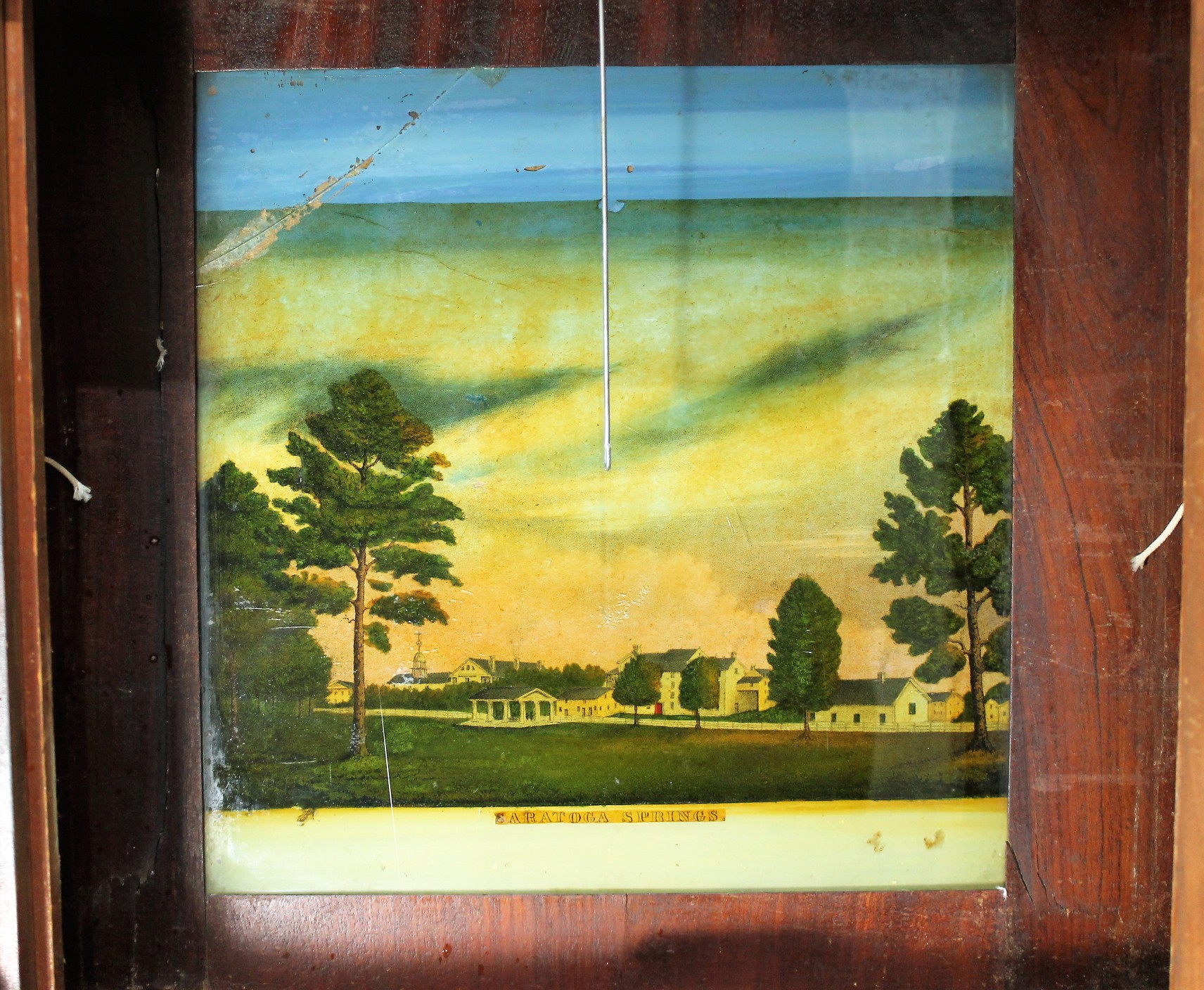
as seen here; there was usually a paper lithograph inside on the backwall or, rarely, a reverse-glass, silk-screened image as found
here of the Saratoga Springs resort. Other significant features include the reverse-painted glass entablature in the cornice,
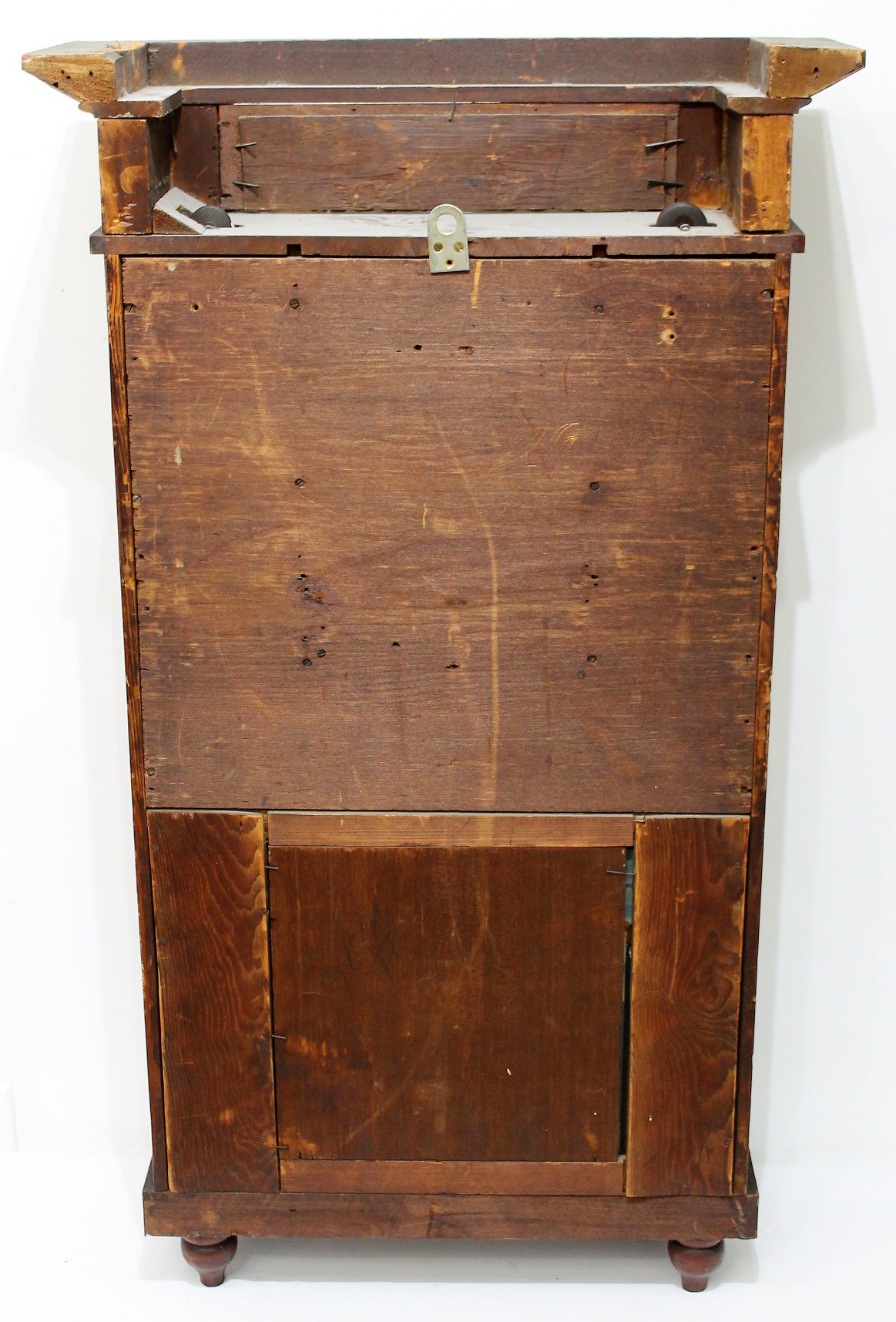
the glass door handles, and the large carved paw feet (turned feet in the back) on the 40-inch case in mahogany veneer. All
five glasses are original; the hands are replacements and there is no label that I can find. The unsigned Adams movement
is running and striking on a wire gong, driven by two large iron weights, and regulated by a period pendulum bob. You won’t
find an example any nicer than this one; AAC sold this clock in 2022 for $1700. $1500-$1800.
Delivery in the eastern half
of the US for $200.


Antique American Clocks JULY 2024